The punch list, done in one walk.
A punch list is the written record of everything left to finish or fix. Photograph each item, say what is wrong out loud, and walk out with the list already written and grouped by room.
One free report a week · Up to 10 items · No card
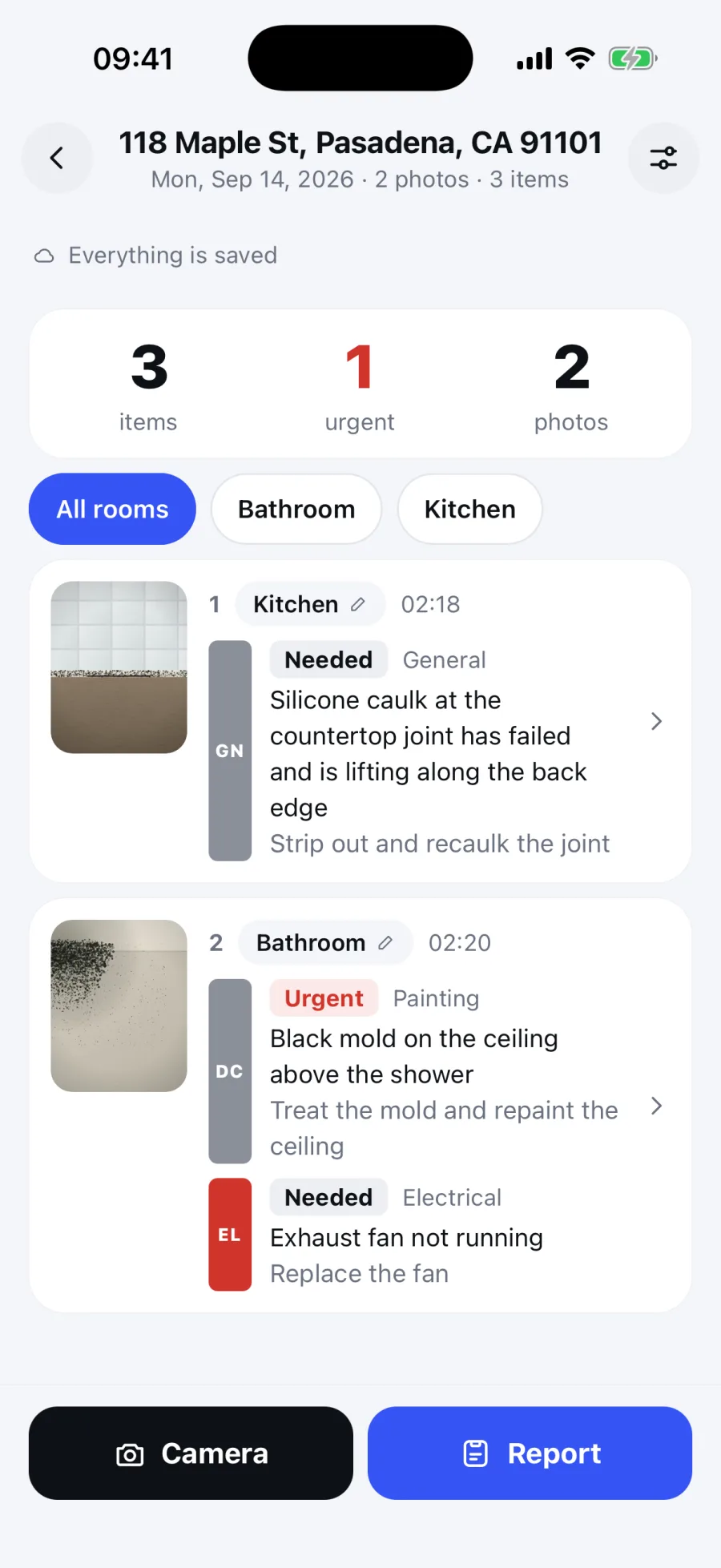
Actual iPhone app. Demonstration walkthrough.
What a punch list actually is
It is not a complaint and it is not a wish list. It is a dated, photographed record of the work that is not finished or not built to standard, and it is the document everything after it rests on.
One item, one line
Every entry names one fault in one place. A line that says ‘kitchen needs finishing’ gets argued with. ‘Kitchen: cabinet door under the sink does not close flush’ gets fixed.
A photo each
The photo is the evidence. Close enough to show the item, wide enough to show where in the room it is. Marking it on the picture removes the last argument about which crack you meant.
Grouped by room
The crew walks the building room by room and so should the list. Anything else means the trim carpenter visits the same hallway four times.
What to check, room by room
Walk one room completely before moving on. The items that get missed are the small cheap ones, and those are the ones that come back as complaints after sign off.
Every room, before anything else
- Walls: dents, roller marks, patched areas showing through, filler left unpainted
- Ceilings: cracks at the joints, shadowing, uneven paint
- Base and casing: gaps at the miters, nail holes unfilled, paint on the floor
- Outlets and switches: level, tight to the wall, working, matching height
- Doors: closing without catching, hardware aligned, hinges not proud
- Windows: opening, locking, sealed, no scratches on the glass
- Flooring: level, no lifting boards, no gaps at the edge
- Registers and returns: secure, clean, blowing
Kitchen
- Cabinet doors aligned and closing flush, all at the same gap
- Countertop seams tight and sealed, no chips at the sink cutout
- Appliances present, working, and the ones you paid for
- Range hood venting outside, not into a soffit
- Backsplash level, grout clean, sealant unbroken
- Under the sink: no drips at the trap after running water for a minute
Bathrooms
- Sealant continuous around tub, vanity and pan, no mold already
- Shower running hot, draining fast, door or screen sealed
- Toilet flushing and refilling cleanly, seat aligned
- Exhaust fan pulling: hold a sheet of tissue to it
- Tile flat, cuts neat at the corners, none hollow when tapped
- Vanity drawers closing square, no water staining under the trap
Outside, garage and attic
- Siding, stucco and brick: cracks, mortar smears, stained units
- Gutters and downspouts secured, falling the right way
- Driveway and walks: ponding water, loose slabs, edging
- Fencing and gates square, latching, posts firm
- Attic insulation even and to depth, not pushed aside
- Attic hatch sealed, no daylight at the eaves
How one item gets recorded
A photo, the sentence you said standing in front of it, and the line that came out the other side. That is the whole loop, and it happens while you keep walking.
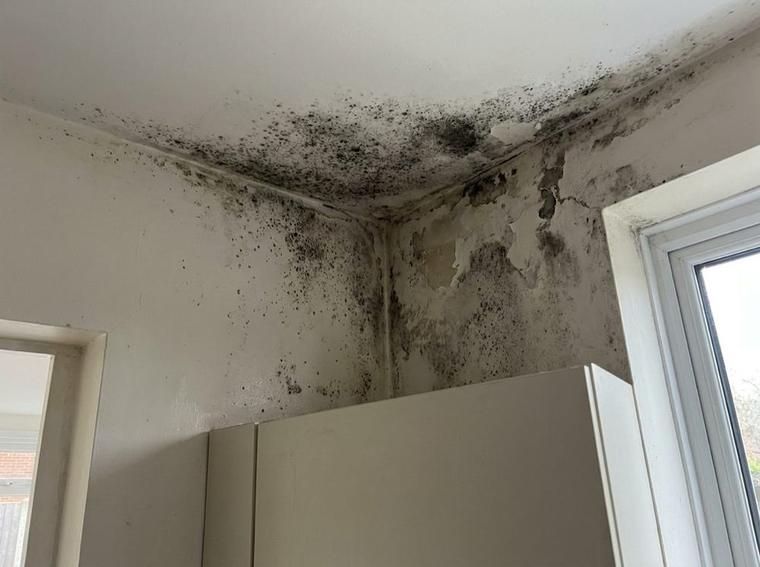 Aug 21 2026 · 10:42
Point, shoot, circle it with your finger.
“Okay, kitchen. There’s black mold all up the corner where the wall meets the ceiling, above the counter. Needs a fungicidal wash, seal it and repaint. That one’s urgent.”
Your own words, held down for as long as it takes.
DefectBlack mold at the wall and ceiling corner above the counter
ActionTreat with fungicidal wash, seal and repaint
Location, defect, action, trade, priority. Nothing added that you did not say.
How to walk it so nothing is missed
- 1
Finish one room before you move
Room by room, in the order you would walk it. Jumping around is how the same item gets recorded twice and the small ones get skipped.
- 2
Photograph before you describe
One clear photo per item, close enough to show the fault and wide enough to show where it is. Mark it on the picture.
- 3
Say what is wrong, not what you want
Describe the item and where it is. Leave the remedy to the trade that owns it, unless the remedy is the point.
- 4
Send it in writing and keep the copy
A dated written list with photos is the record you rely on later. A phone call is not a record.
What the finished list looks like
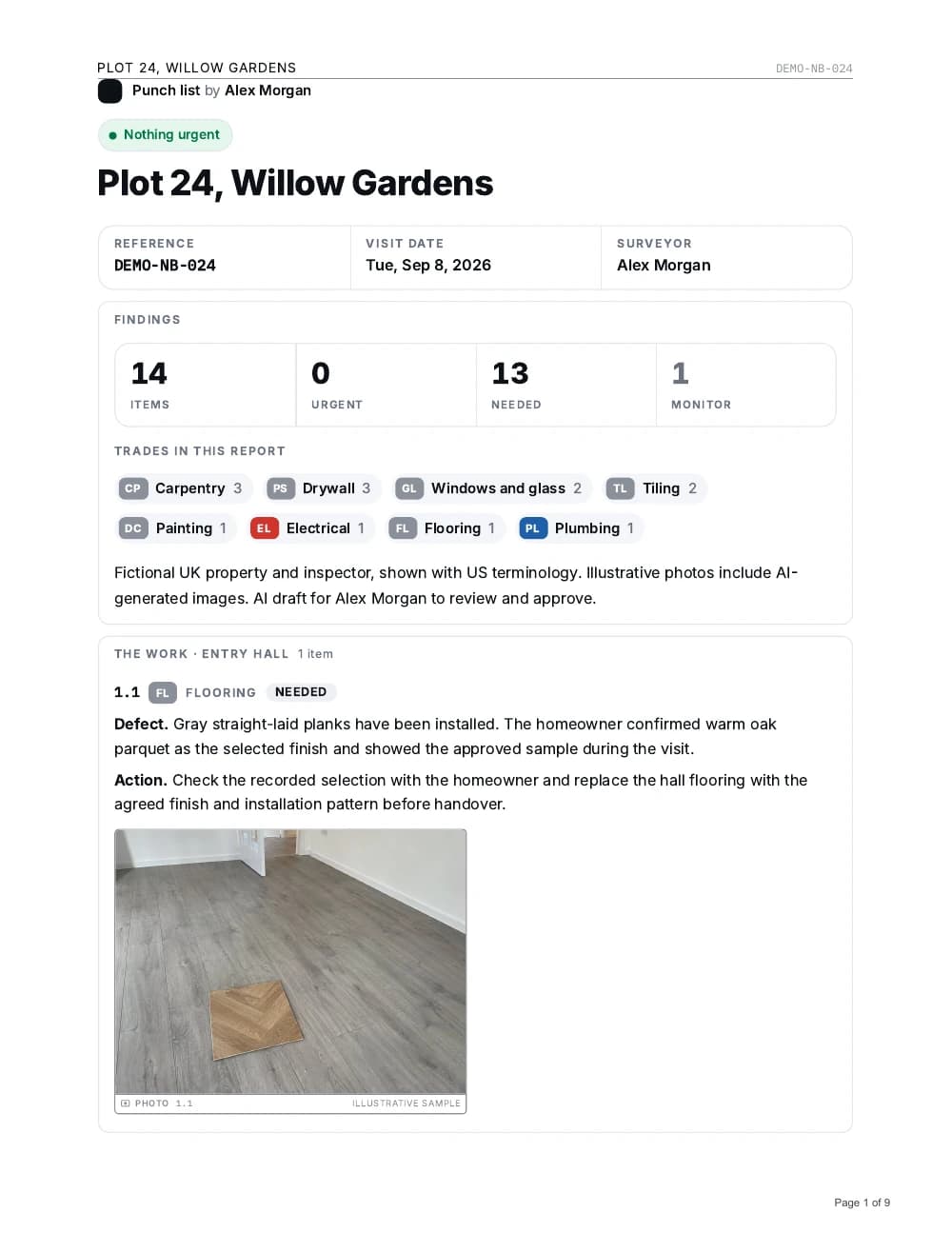
This is the document the app produces. Every line comes from a photo and a spoken sentence on site, and nothing is typed up afterwards.
For the contractor
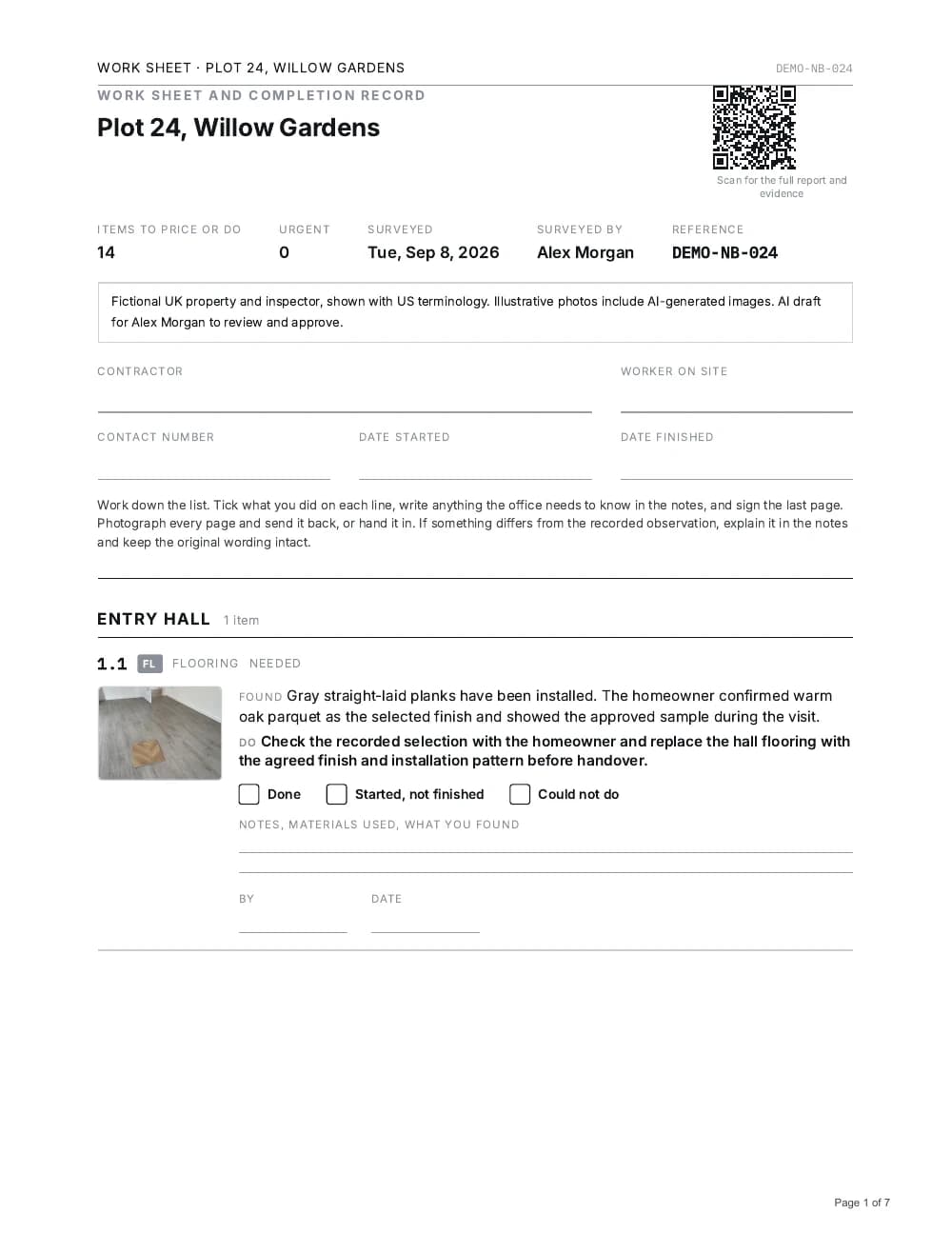
Work sheet
The same 14 numbered items. Print it for notes, materials used and completion.
Open the 7-page work sheetRoom order, or trade order?
Both, and picking one is where most lists go wrong. Room order is how the work happens. Trade order is how it gets priced. The same list, presented twice, solves it.
By room, for the walk
By trade, for the pricing
The defect is not what costs you. The missing record is.
Nobody loses money because a wall was wet. They lose it because six months later there is nothing to show it was wet that day, who was told, and what was agreed.
cause of construction disputes worldwide
Arcadis tracks the causes of construction disputes globally. Poorly drafted, incomplete or unsubstantiated claims sits in the top three every year, and has taken the top spot. Not the work. The paperwork behind the claim.
Arcadis Global Construction Disputes Reportis all the evidence you will ever get
You are in that unit once before the trades move on. Whatever you failed to photograph and describe while you stood there is gone, and reconstructing it from a camera roll two weeks later is guesswork with your name on it.
between opening it and the first photograph
Type the address and go. No project to configure, no template to pick, no checklist to build first. The tools that ask for that get abandoned in the parking lot.
The dispute figure is Arcadis’s industry research, not ours, and we do not claim it as our result. The other two describe how the product works, and carry no citation because they are not research.
Whether this is for you
You will probably get on with it if
- You would rather talk than type, and you talk about buildings all day.
- You already take the photos. You just never turn them into anything.
- You want the job written up before you get back in the truck, not after dinner.
- You think a line nobody can price is not a line.
- You have lost an argument once for want of a dated photo, and you did not enjoy it.
It is probably not for you if
- You want to configure templates, checklists and workflows before your first photo. There is nothing to configure and that is deliberate.
- You need assignees, due dates and a close-out workflow. This records what is wrong. It does not manage the fixing.
- You want the app to estimate quantities or costs. Record those yourself and check the AI draft before sharing.
- Somebody else already writes your walkthroughs up perfectly, for free.
Start free. Share one report a week free, up to 10 items. AI usage limits apply. What it costs after that.
Questions people ask
What is a punch list?
A punch list is the written record of every item left to complete or correct before a job is considered finished. Each entry names one fault in one place, backed by a photo, and the list is normally grouped by room so the crew can work through it in the order they walk the building.
When should the punch list be done?
As the work approaches completion and before final payment changes hands, because that is when the list still has leverage behind it. Walk it again after moving in, with the heating and cooling running and the water used, since some items only show up once the building is lived in.
Who creates the punch list?
It depends on the job. On residential work the buyer or their inspector commonly produces it; on commercial work the architect or general contractor compiles it and the subcontractors work from it. What matters more than who writes it is that every line is specific, photographed and dated.
How many items should be on a punch list?
There is no target number and padding a list weakens it. Record what is genuinely wrong, describe each item precisely, and photograph it. A short list of well evidenced items gets acted on faster than a long list of opinions.
What if the builder ignores the list?
Send it in writing and keep the dated copy with its photos, because that record is what any escalation rests on. Follow up in writing too. Verbal agreements about what was promised are exactly what falls apart six months later.
Walk the building once. Leave with the list.
Try your first walkthrough free: the iPhone app from the App Store, or your browser. Capture photos and notes on site, then connect to review the AI draft and share your report.
One free report a week · Up to 10 items · No card