Walk it before you sign for it.
The walkthrough before closing is the one moment the builder still has every reason to say yes. Photograph everything, say what is wrong, and hand them a list in writing the same day.
One free report a week · Up to 10 items · No card
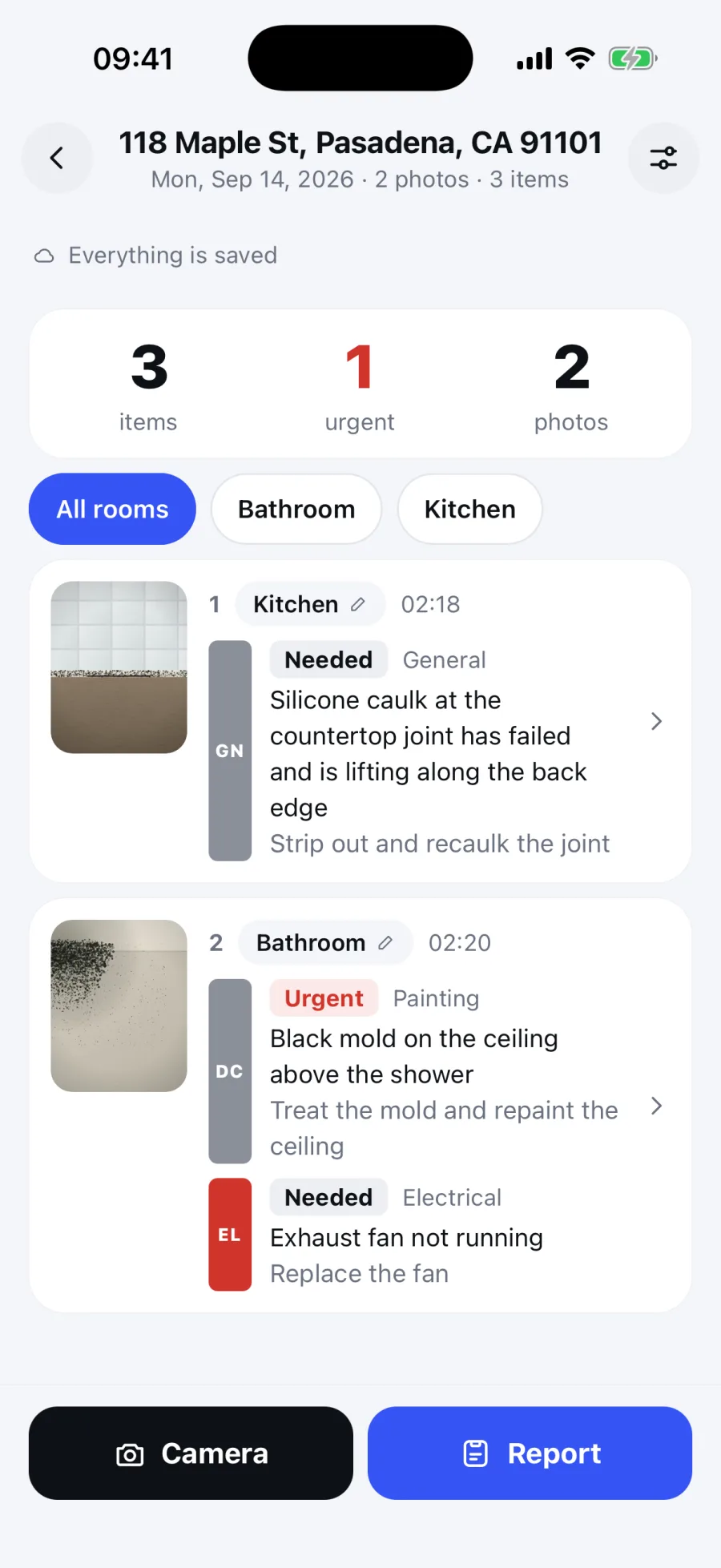
Actual iPhone app. Demonstration walkthrough.
Six items on every new construction walk, and the line to write
None of these is dramatic and that is the point: they are the things a buyer walks past and an inspector writes down. Each one is a photo, a circle, and one sentence a builder can act on.
 DC
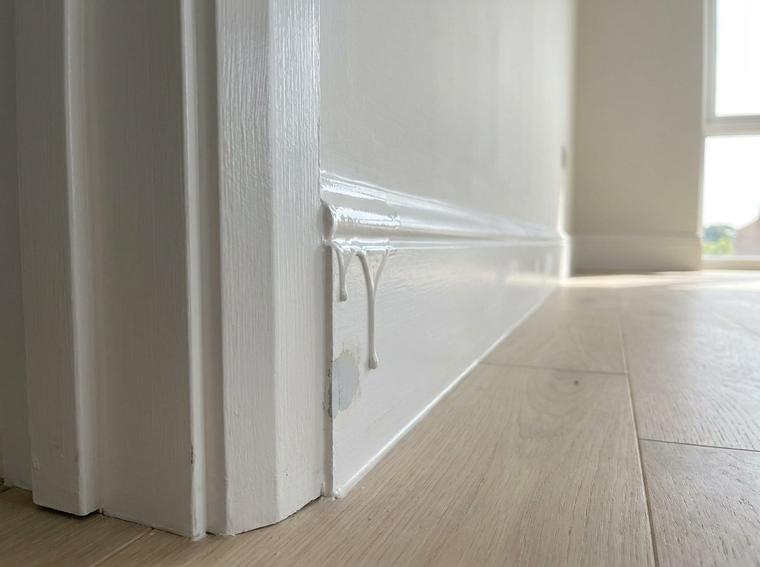
DCPaint runs on the baseboard
DecoratingPaint runs to the baseboard in the hall, filler showing through the top coat
 CP
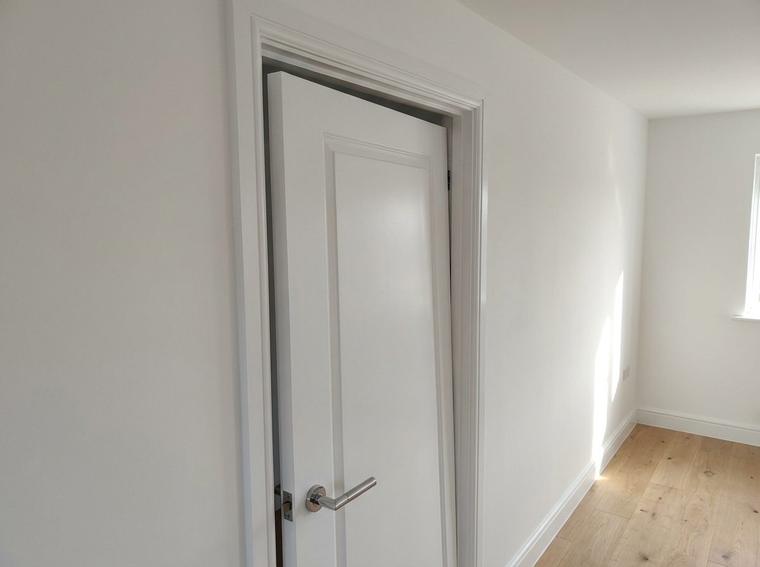
CPDoor not closing flush
CarpentryBedroom door does not close flush, gap wider at the head than the foot
 CP
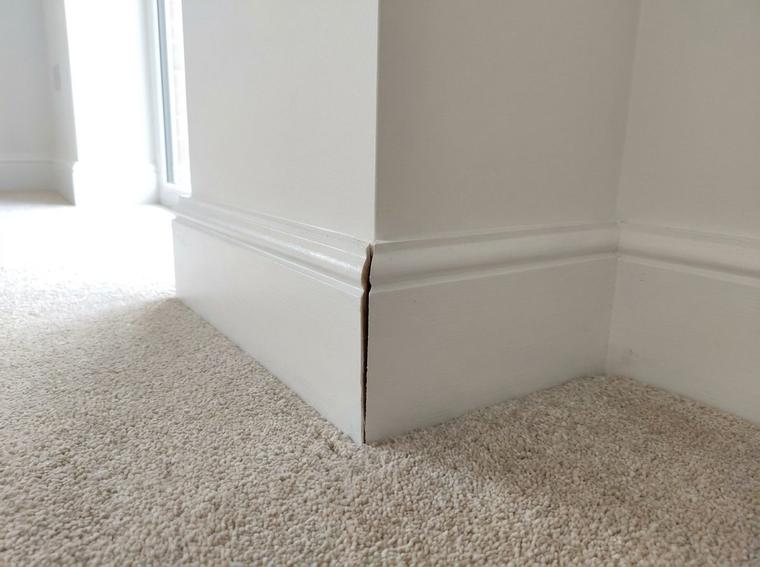
CPOpen miter at the baseboard
CarpentryBaseboard miter open in the corner of the living room, gap unfilled
 TL
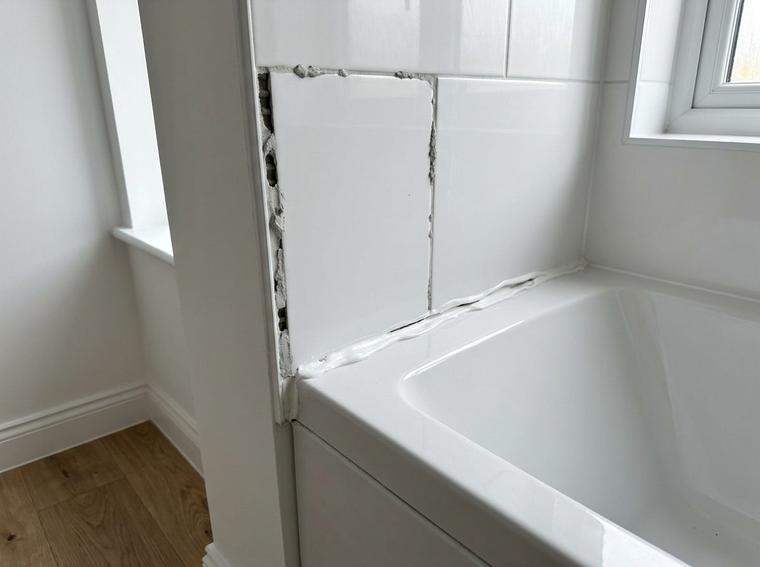
TLGrout and sealant missed
TilingGrout missing to the tile joint above the tub and the sealant bead is uneven
 GL
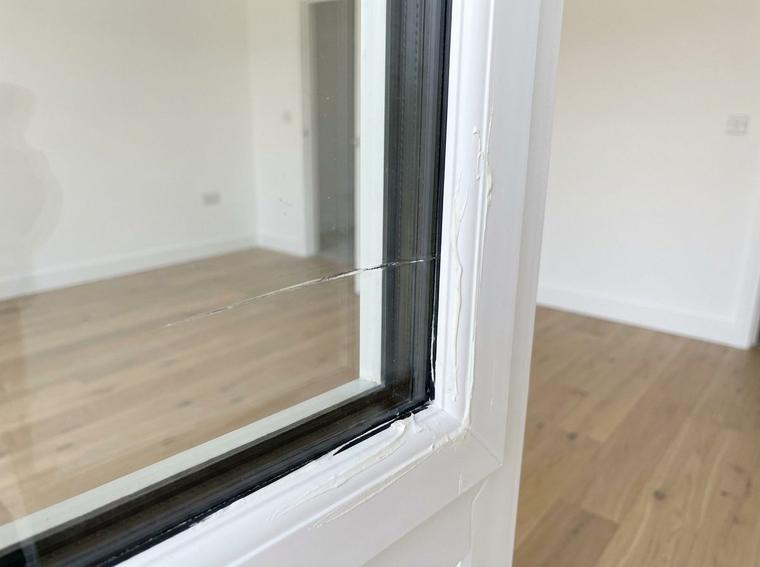
GLScratched glass, sealant on the frame
GlazingScratch to the glazing in the front bedroom and sealant left on the frame
 PS
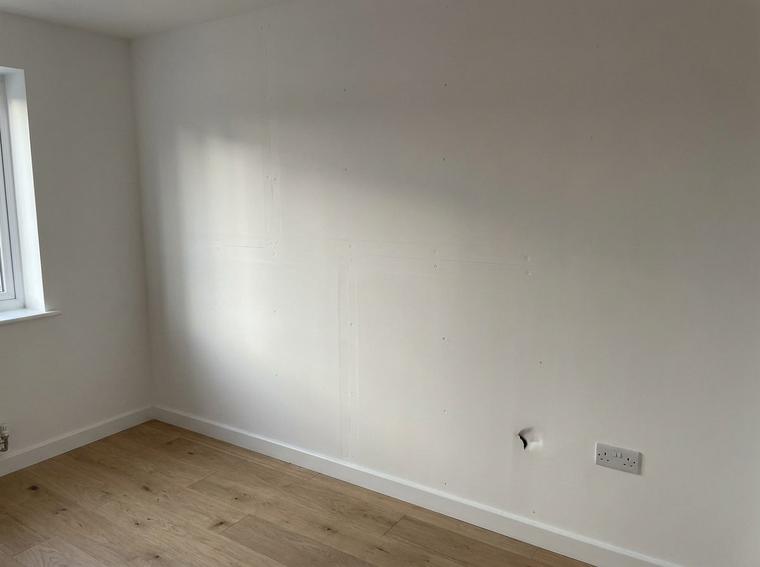
PSDrywall seams showing through
PlasteringDrywall seams and fasteners showing through the paint on the landing wall
Photograph it, circle it, say that sentence out loud. The list writes itself while you walk to the next room.
Why the timing decides the outcome
Before closing, the builder wants the sale finished and you have the one piece of leverage you will ever have. After closing, you are a warranty claim, and warranty claims are queued.
Nothing about that is hostile. Site managers deal with punch items every week and expect them. What changes after closing is not their goodwill, it is their urgency, and urgency is what you are actually spending on the walkthrough.
So the walkthrough is not a formality to get through. It is the moment you convert what you can see into something written, dated and photographed, while it still costs the builder more to argue than to fix.
What builders actually act on
A specific location
Not ‘upstairs’. The room, and where in the room. A trade who was not on your walkthrough has to find it without calling you.
A photo with the fault marked
A picture of a wall proves nothing. A picture of a wall with the dent circled ends the conversation about which dent.
One item per line
Bundled items get partially fixed and then called done. Separate lines get separately signed off.
Plain description, not blame
Describe what is wrong. Lists that read like accusations get resistance; lists that read like a trade handover get worked through.
A date on the record
The date is what stops an item becoming ‘that must have happened after you moved in’ six months later.
It in writing, kept
Whatever you agree verbally on the walkthrough, send the same list in writing afterwards and keep your copy.
The things most people miss
The obvious faults get found by everybody. These are the ones that get skipped on the walkthrough and cost money later.
Turn it all on
- Run every faucet for a full minute and look under the sink after
- Flush every toilet twice and watch the refill
- Run the HVAC in both heating and cooling and check every register blows
- Test every outlet, including the ones behind where furniture will go
- Open and close every window and every door, twice
- Run the dishwasher and the disposal, not just look at them
Look where nobody looks
- Inside cabinets and under the sink, for unfinished carpentry and leaks
- The attic hatch, for daylight and disturbed insulation
- Behind the door swing, where drywall gets dinged during move-in
- The garage: floor cracks, unfinished drywall, the door reversing safely
- Grading around the foundation, and where downspouts discharge
- Every silicone and caulk line, for gaps and shrinkage already
A photo and a sentence, and the line is written
You photograph the item, you say what is wrong with it, and it comes out as something a builder can price. Nothing gets typed up afterwards.
Aug 21 2026 · 09:18Point, shoot, circle it with your finger.
“Hall. There’s paint runs all down the baseboard by the front door, and you can see the filler coming through the top coat. Needs sanding back and a proper second coat. Not urgent, but it’s on the list.”
Your own words, held down for as long as it takes.
DefectPaint runs to the baseboard by the front door, filler showing through the top coat
ActionSand back and reapply the finish coat
Location, defect, action, trade, priority. Nothing added that you did not say.
One walk, and the report is written
- 1
Type the address
That is the entire setup. No project, no rooms to configure, no template to pick.
- 2
Photograph and circle each item
Draw straight on the picture with your finger, so nobody has to guess which mark you meant.
- 3
Say what is wrong
Hold the button and talk. It becomes a written line with the trade and the urgency against it.
- 4
Send it from the driveway
A PDF grouped by room, your photos and circles included, signed off in your name.
What you hand the builder
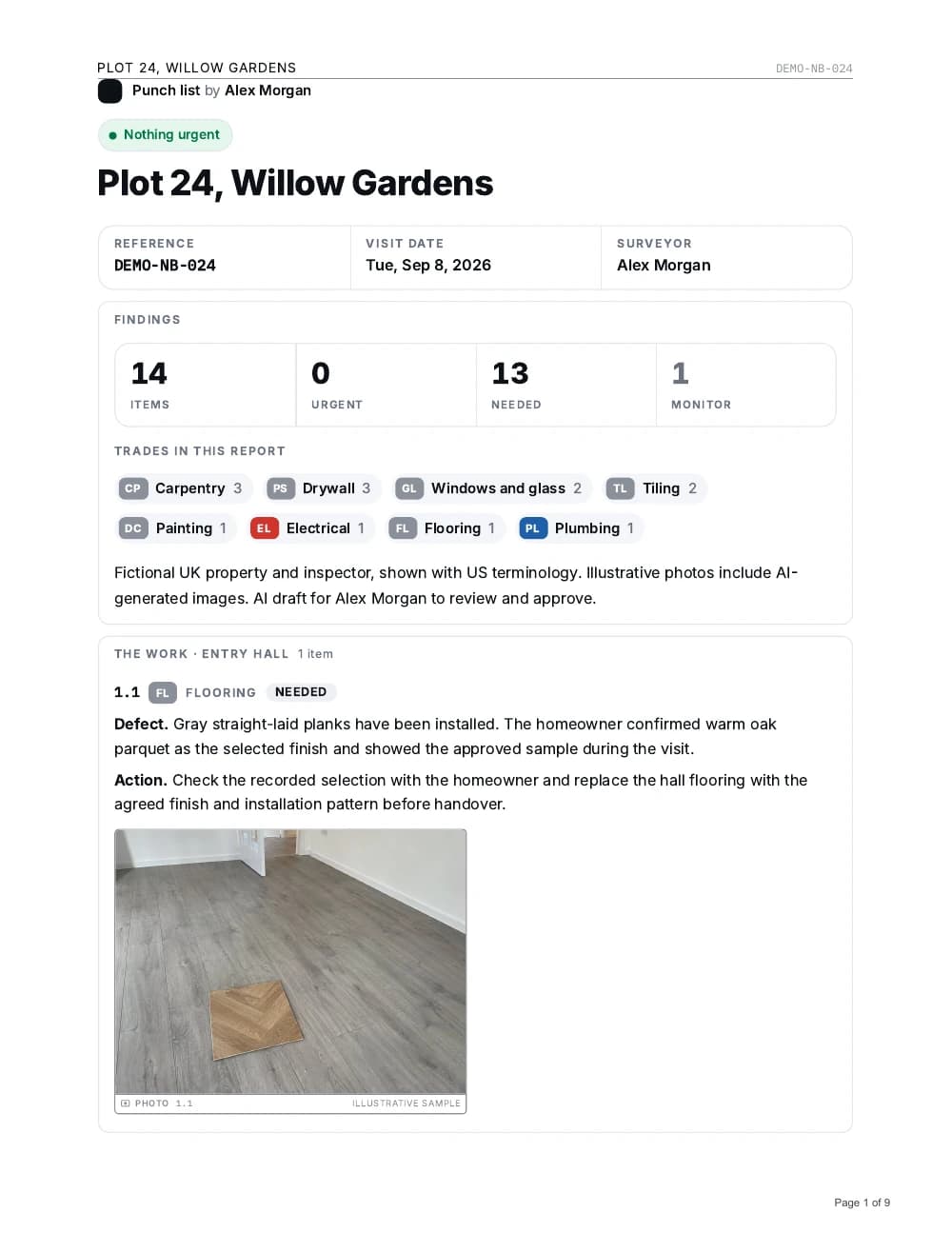
One document, grouped by room for the walk and by trade for the pricing, with the photo and the dated record on every line.
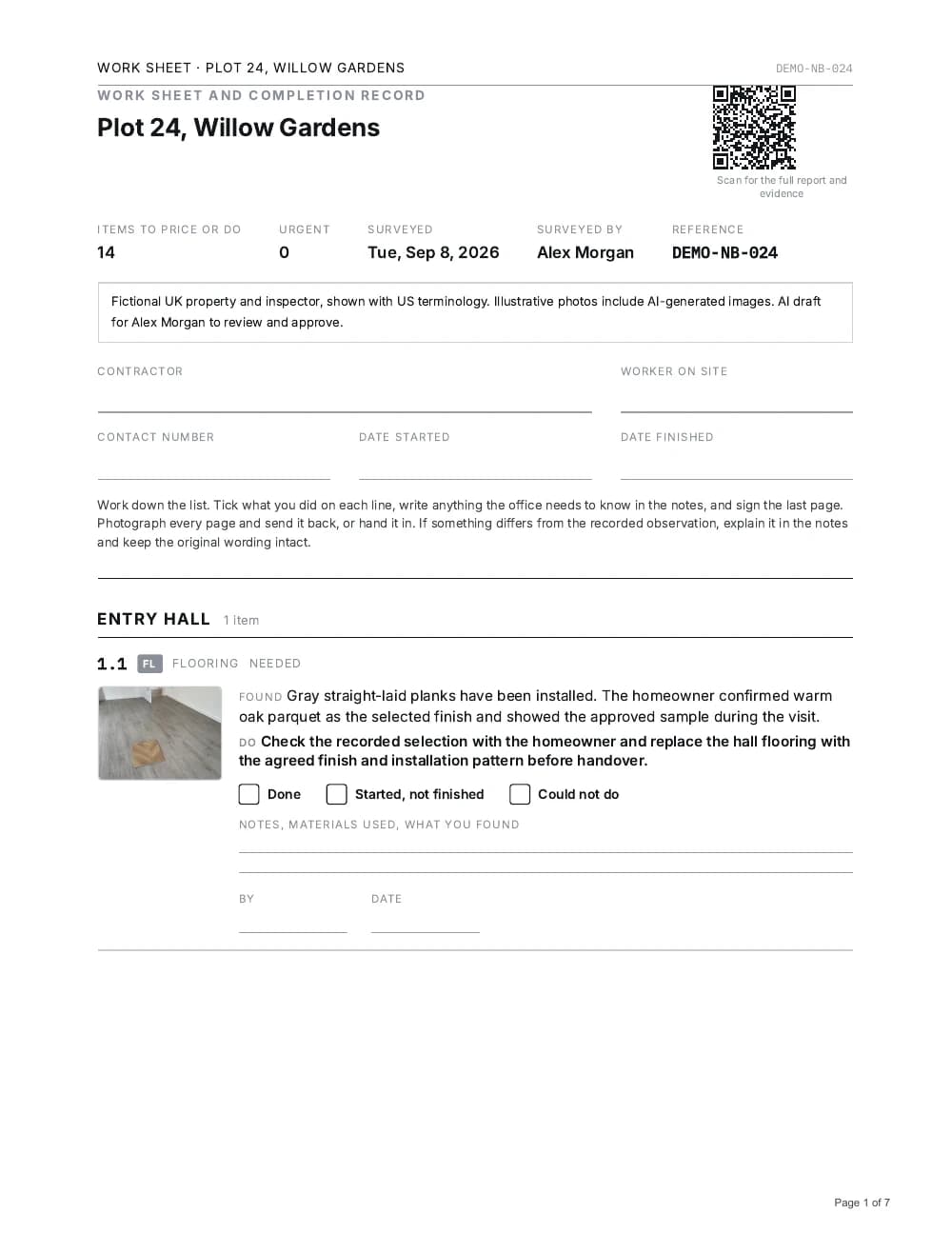
For the contractor
Work sheet
The same 14 numbered items. Print it for notes, materials used and completion.
Open the 7-page work sheetThe defect is not what costs you. The missing record is.
Nobody loses money because a wall was wet. They lose it because six months later there is nothing to show it was wet that day, who was told, and what was agreed.
cause of construction disputes worldwide
Arcadis tracks the causes of construction disputes globally. Poorly drafted, incomplete or unsubstantiated claims sits in the top three every year, and has taken the top spot. Not the work. The paperwork behind the claim.
Arcadis Global Construction Disputes Reportis all the evidence you will ever get
You are in that unit once before the trades move on. Whatever you failed to photograph and describe while you stood there is gone, and reconstructing it from a camera roll two weeks later is guesswork with your name on it.
between opening it and the first photograph
Type the address and go. No project to configure, no template to pick, no checklist to build first. The tools that ask for that get abandoned in the parking lot.
The dispute figure is Arcadis’s industry research, not ours, and we do not claim it as our result. The other two describe how the product works, and carry no citation because they are not research.
Whether this is for you
You will probably get on with it if
- You would rather talk than type, and you talk about buildings all day.
- You already take the photos. You just never turn them into anything.
- You want the job written up before you get back in the truck, not after dinner.
- You think a line nobody can price is not a line.
- You have lost an argument once for want of a dated photo, and you did not enjoy it.
It is probably not for you if
- You want to configure templates, checklists and workflows before your first photo. There is nothing to configure and that is deliberate.
- You need assignees, due dates and a close-out workflow. This records what is wrong. It does not manage the fixing.
- You want the app to estimate quantities or costs. Record those yourself and check the AI draft before sharing.
- Somebody else already writes your walkthroughs up perfectly, for free.
Start free. Share one report a week free, up to 10 items. AI usage limits apply. What it costs after that.
Questions people ask
When should I do the walkthrough?
Before closing, while the builder still has a reason to move quickly, and then again after you have lived in the house for a few weeks with the systems running. The second walk catches what only shows up in use.
Can I bring my own inspector?
In most cases yes, and many buyers do. An inspector brings experience of what fails and a report format builders recognise. It is worth asking your builder about their walkthrough policy early rather than on the day.
Are hairline cracks a punch item?
Usually not. A new house dries out over its first year and minor shrinkage cracking is expected. Record them separately so the genuine items on your list are not dismissed alongside them.
What if I already closed?
You have not lost everything. Most new homes come with a builder warranty, and the written record you make now still matters. Document what you find, send it in writing, and keep the dated copy with its photos.
How long should the walkthrough take?
Longer than the builder schedules for it. An unhurried walk of an average new home takes a couple of hours if you are actually running water, testing outlets and opening everything. Rushing it is how the expensive items get missed.
Walk it before you sign for it
Capture photos and notes on site, even without signal after opening the app online. Connect to review the AI draft. Share one report a week free, up to 10 items.
One free report a week · Up to 10 items · No card