A scope nobody has to call you about.
A scope of work is the written list of every job at a property, described precisely enough that a trade can price it or do it without coming back to you with questions.
One free report a week · Up to 10 items · No card
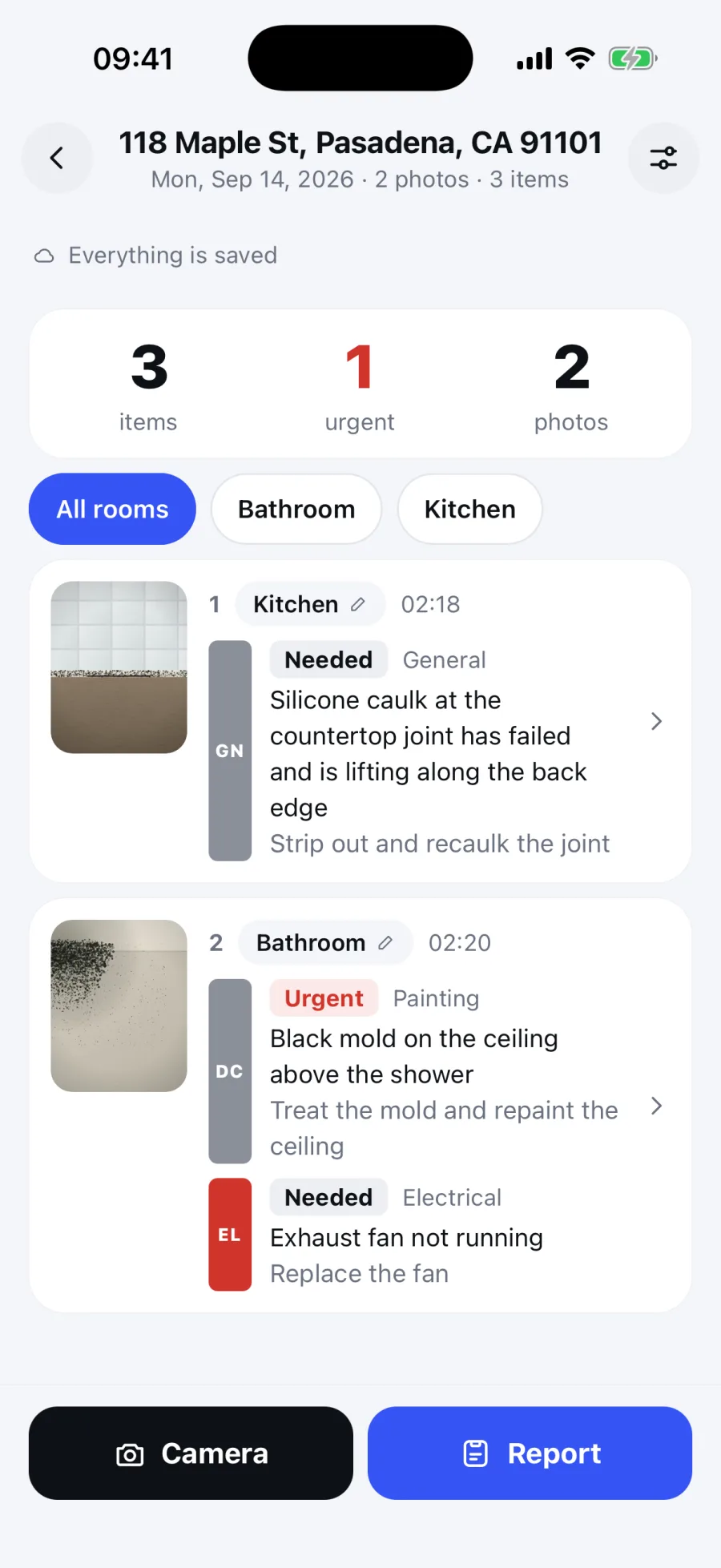
Actual iPhone app. Demonstration walkthrough.
What a scope of work has to contain
Every line needs six things. Miss any one of them and the line stops being priceable.
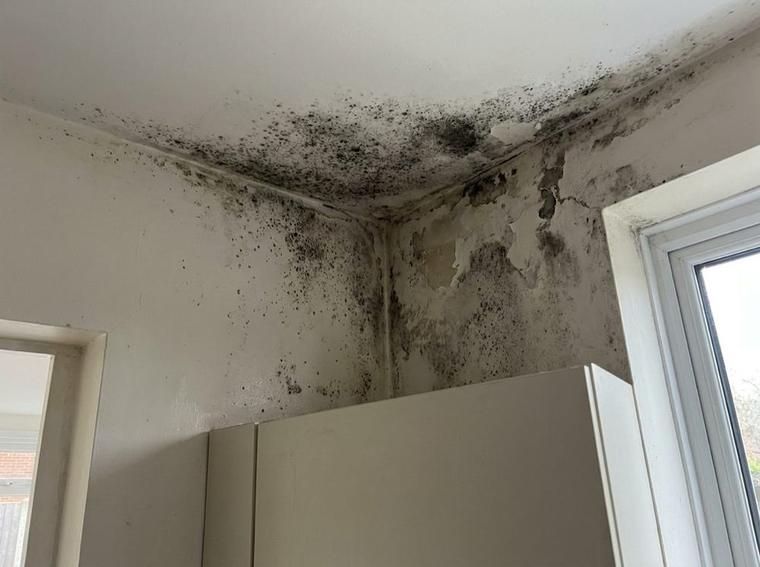
DefectBlack mold at the wall and ceiling corner above the counter
ActionTreat with fungicidal wash, seal and repaint
Location. The room, and where in the room.
Defect. What is wrong, in the words you would use standing in front of it.
Action. What needs doing. This is the part that gets priced.
Trade. Who does it, so the document can be split and sent out.
Priority. Urgent, needed, or monitor.
Photo. The evidence, dated, showing the defect itself.
Scope of work, or specification?
A scope of work defines the extent of the work: which jobs, in which rooms. A specification defines the standard that work is held to: the materials, the products, the workmanship.
On a small job the scope is often all you need. On a larger one the two sit together, with the scope listing the jobs and the specification setting how each is to be done.
Keep pricing out of both. A scope describes the work; the number is the contractor’s response to it. Holding those apart is what makes bids comparable, because everyone is pricing the same list rather than their own reading of a conversation.
Room order, or trade order?
Both, and picking one is where most scopes go wrong. Room order matches the route somebody walks the building. Trade order is how it gets priced. The same list, presented twice, solves it.
By room, for the walk
By trade, for the pricing
Where scopes of work go wrong
Wording nobody can price
Make good, as required, and various repairs are not jobs. Two contractors will read them two ways and price them two ways, and the gap surfaces halfway through the work.
No photo attached to the line
A written line describes a defect. A photo proves it, dates it, and settles the argument about whether it was there before the work started.
A cause that was never established
Recording water damage caused by a roof leak, when nobody went into the attic, turns an observation into a claim. Record what you saw and make the investigation its own line.
Quantities invented after the fact
A figure guessed at the desk is worse than no figure, because it gets treated as a measurement. If it was not measured on site, it is not in the scope.
Written up days later
The jobs you remember are the big ones. The ones that get missed are the small cheap ones, and those are the ones that come back as complaints after signoff.
One document, one audience
A scope written only for the client cannot be sent to five trades, and a scope written only for trades reads like a foreign language to the person paying.
Writing it while you are still in the room
Almost every problem above comes from the same root cause: the scope is written hours later, from photos that no longer have any context. The fix is not a better template. It is capturing each job while you are looking at it.
Aug 21 2026 · 10:42Point, shoot, circle it with your finger.
“Okay, kitchen. There’s black mold all up the corner where the wall meets the ceiling, above the counter. Needs a fungicidal wash, seal it and repaint. That one’s urgent.”
Your own words, held down for as long as it takes.
DefectBlack mold at the wall and ceiling corner above the counter
ActionTreat with fungicidal wash, seal and repaint
Location, defect, action, trade, priority. Nothing added that you did not say.
What comes out
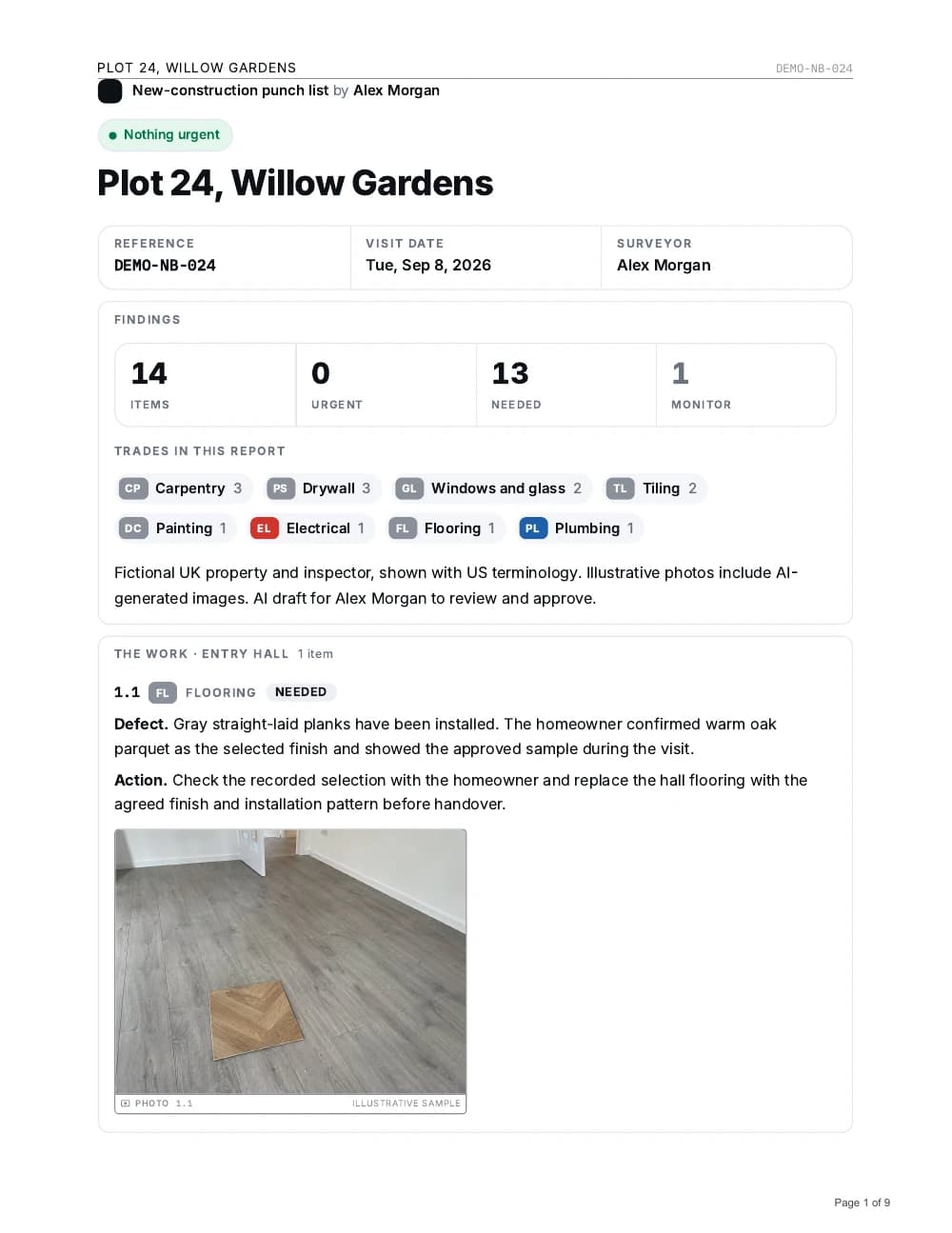
Grouped by room for the walk and by trade for the pricing, with the photo and the dated record on every line.
For the contractor
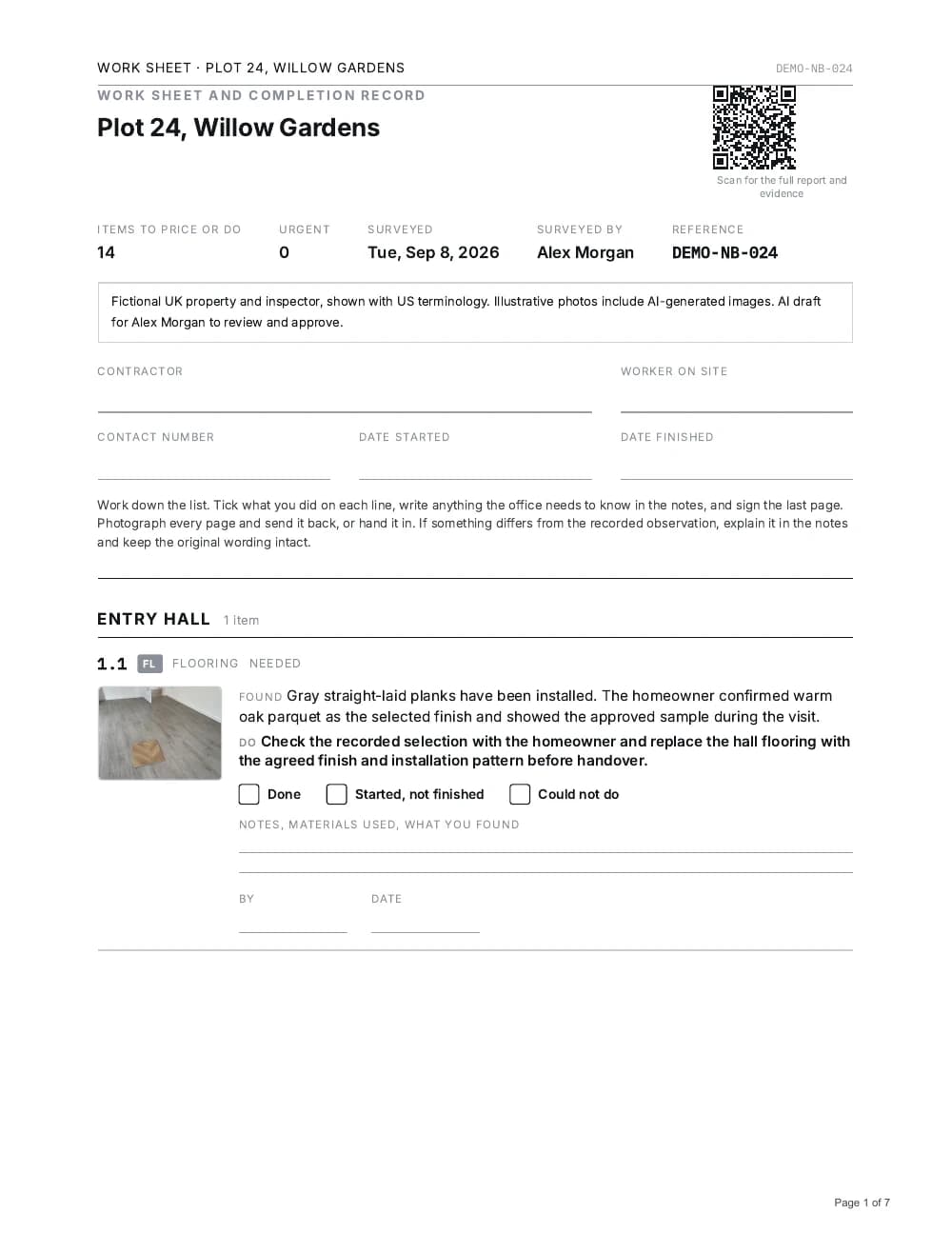
Work sheet
The same 14 numbered items. Print it for notes, materials used and completion.
Open the 7-page work sheetThe defect is not what costs you. The missing record is.
Nobody loses money because a wall was wet. They lose it because six months later there is nothing to show it was wet that day, who was told, and what was agreed.
cause of construction disputes worldwide
Arcadis tracks the causes of construction disputes globally. Poorly drafted, incomplete or unsubstantiated claims sits in the top three every year, and has taken the top spot. Not the work. The paperwork behind the claim.
Arcadis Global Construction Disputes Reportis all the evidence you will ever get
You are in that unit once before the trades move on. Whatever you failed to photograph and describe while you stood there is gone, and reconstructing it from a camera roll two weeks later is guesswork with your name on it.
between opening it and the first photograph
Type the address and go. No project to configure, no template to pick, no checklist to build first. The tools that ask for that get abandoned in the parking lot.
The dispute figure is Arcadis’s industry research, not ours, and we do not claim it as our result. The other two describe how the product works, and carry no citation because they are not research.
Whether this is for you
You will probably get on with it if
- You would rather talk than type, and you talk about buildings all day.
- You already take the photos. You just never turn them into anything.
- You want the job written up before you get back in the truck, not after dinner.
- You think a line nobody can price is not a line.
- You have lost an argument once for want of a dated photo, and you did not enjoy it.
It is probably not for you if
- You want to configure templates, checklists and workflows before your first photo. There is nothing to configure and that is deliberate.
- You need assignees, due dates and a close-out workflow. This records what is wrong. It does not manage the fixing.
- You want the app to estimate quantities or costs. Record those yourself and check the AI draft before sharing.
- Somebody else already writes your walkthroughs up perfectly, for free.
Start free. Share one report a week free, up to 10 items. AI usage limits apply. What it costs after that.
Common questions
What is a scope of work?
A written list of every job that needs doing at a property, described precisely enough that someone can price it or carry it out without coming back to you with questions. Each line records where the problem is, what is wrong, and what needs doing about it.
Should a scope of work include prices?
No. A scope describes the work; pricing is the contractor’s response to it. Keeping the two apart is what makes bids comparable, because every contractor is pricing the same list rather than their own interpretation of a conversation.
How detailed does it need to be?
Detailed enough that a trade who was not at the walkthrough can price the line without calling you. In practice that means a specific location, a specific defect, a specific action, and a photo.
Is there a scope of work template?
Templates exist, but the useful structure is simple enough to hold in your head: location, defect, action, trade, priority, photo. The harder part is capturing every job accurately while you are standing in the room.
Who writes the scope of work?
Whoever walked the property. On residential work that is often the contractor bidding it; on larger jobs an architect, an owner’s representative or a property manager. What matters is that every line traces to something that person saw and recorded.
Photo in, scope of work out
Walk the property, photograph each problem and say what is wrong. Leave with the document already written.
One free report a week · Up to 10 items · No card