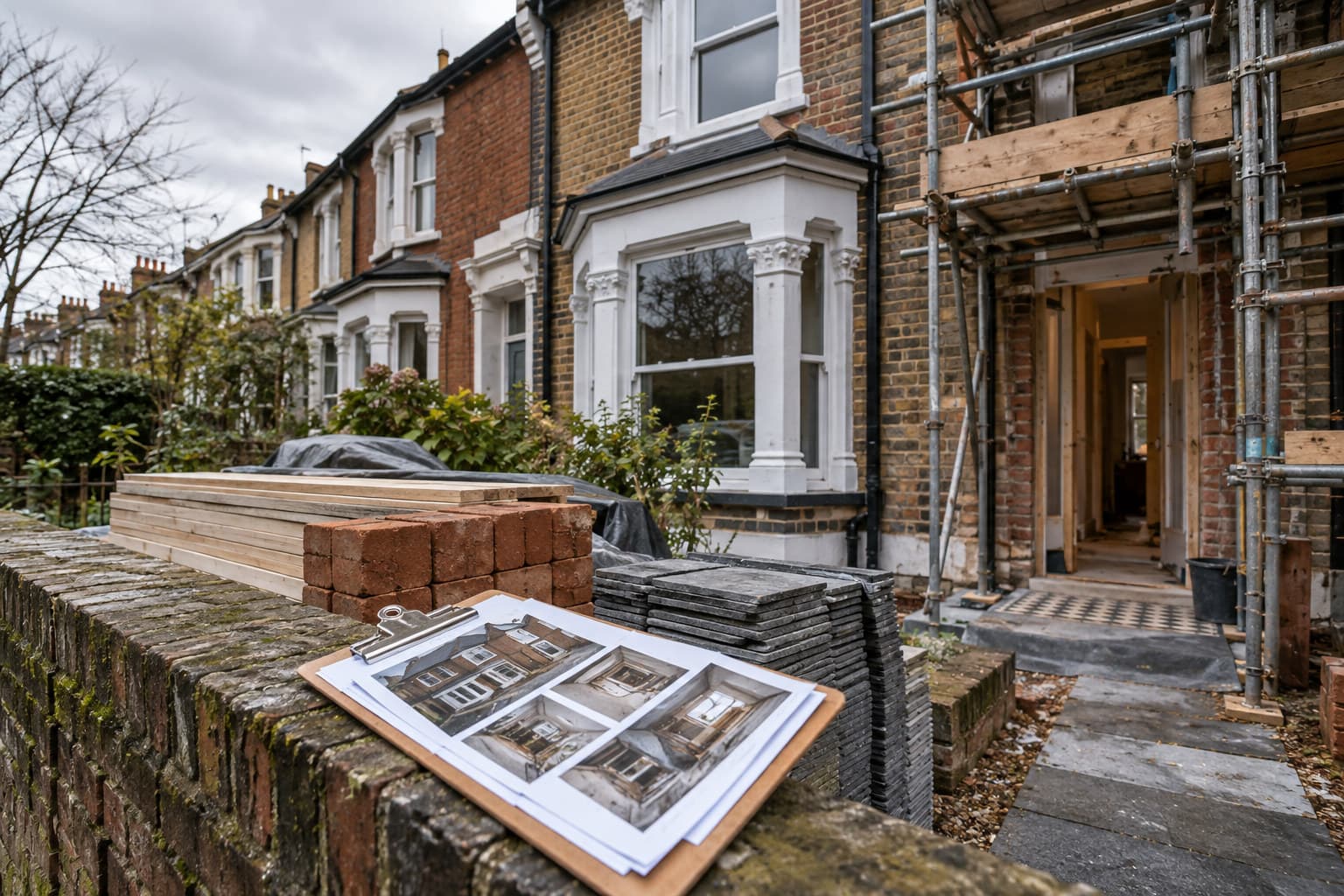
Before you take a builder to court you need, in order, clear evidence of the defect, a paper trail showing you gave the builder a chance to put it right, and your claim framed around what the law actually lets you ask for.
This is general information, not legal advice
Nothing here is legal advice, and nothing here tells you what a court, an adjudicator or your builder will do. The court material below is England and Wales only. If your dispute is heading anywhere near a courtroom, treat this as a checklist for getting organised, not as a prediction of the result.
1. Evidence of the defect, dated and specific
Before anything else, you need a clear record of what is wrong, where, and when you found it. Vague complaints do not hold up. You want photographs of each defect, ideally with something in frame to show scale or location, taken as close as possible to when you noticed the problem, and kept somewhere they cannot be edited or lost.
This is the point where a tool built for exactly this helps. SayScope lets you walk the property, photograph each defect, circle it on the photo and record what is wrong by voice, then leaves you with a report grouped by room and by trade. Visits are free and unlimited, and each account gets one report a week free, which covers most single-property disputes.
2. A paper trail showing you gave the builder the chance to fix it
Section 55 of the Consumer Rights Act 2015 gives you the right to require the trader to perform the service again to complete it properly. The trader must do this within a reasonable time and without significant inconvenience to you, and must bear any necessary costs, including the cost of labour or materials. Repeat performance cannot be required if completing the work in conformity with the contract is impossible.
In practice this means you need to have actually asked, in writing, for the work to be put right, and given a reasonable time for that to happen. Keep copies of what you sent and when. If repeat performance is not available to you, or the builder has not done it within a reasonable time and without significant inconvenience, section 56 gives you the right to require the price to be reduced by an appropriate amount instead. Where a refund is due under section 56, it must be paid without undue delay and in any event within 14 days of the trader agreeing you are entitled to it, using the same means you used to pay, with no fee charged for making it.
- Written notice to the builder describing the defect
- The date you sent it and the date of any reply
- What was agreed, if anything, about putting it right
- Whether the builder attempted a fix, and the outcome
3. Know your time limit
Section 5 of the Limitation Act 1980 sets a six year limit from the date the cause of action accrued for an action founded on simple contract. Work out roughly when that clock started for your contract before you plan anything else, since it affects how much time you actually have to gather evidence and make a decision.
4. Check whether adjudication is even open to you
Section 108 of the Housing Grants, Construction and Regeneration Act 1996 gives parties to a construction contract the right to refer a dispute to adjudication at any time, with a timetable that secures appointment and referral within 7 days of notice, a decision within 28 days of referral (extendable by up to 14 days with the consent of the referring party), and a decision that is binding until the dispute is finally resolved by legal proceedings, arbitration or agreement.
5. Know the shape of a small claim before you file
Civil Procedure Rules Part 27 covers the small claims track, which generally applies to claims not exceeding £10,000. Under rule 27.5, no expert may give evidence, written or oral, at a hearing without the court’s permission, so do not assume you can simply bring in an expert report. The standard directions require each party to file and serve copies of all documents they intend to rely on at least 14 days before the final hearing. The strict rules of evidence do not apply and the court does not need to take evidence on oath, which is part of why your own dated photographs and written correspondence matter so much.
- 1Gather dated photographic evidence of each defect
- 2Collect your written correspondence asking for the work to be put right
- 3Work out when your six year limitation period started
- 4Check whether you are a residential occupier, which closes off adjudication
- 5Prepare the documents you intend to rely on, ready to file and serve at least 14 days before any hearing