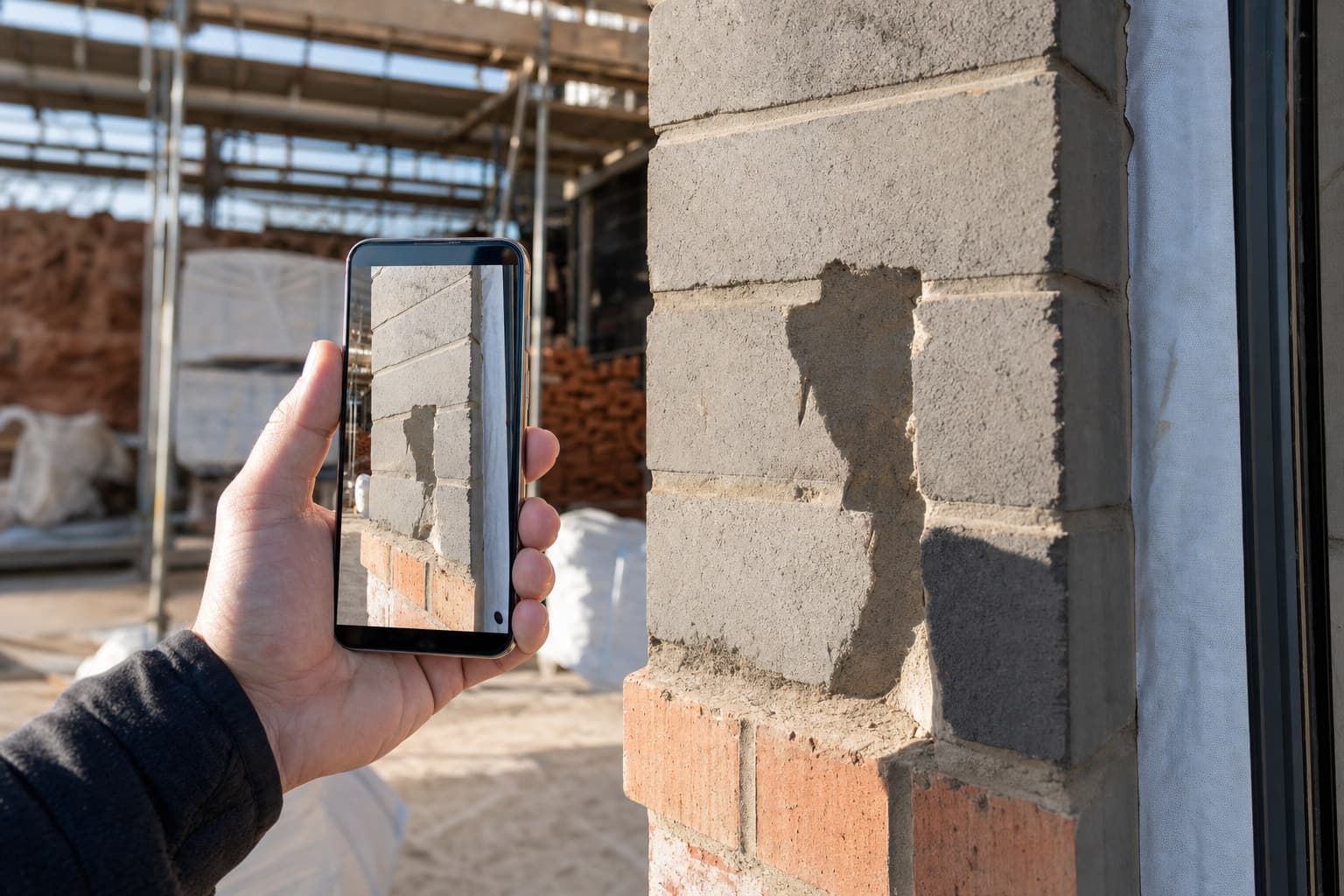
A site diary that writes itself is simply a walk-and-talk record, photo, circle, voice note, that turns into a grouped report before you have left the plot.
Why the paper site diary keeps failing
The traditional site diary is a notebook, a memory, and an evening spent typing it up before it goes cold. By the time it reaches the client or the file, half the detail has been smoothed over or forgotten, and the version that survives is whatever you could reconstruct after the fact.
For a contractor, that gap matters. A diary is not just a record for your own reference, it is evidence of what was on site, when, and in what condition. If it only exists as prose written hours later, it is already weaker than it needs to be.
What writing itself actually means
A diary that writes itself does not mean no input from you. It means the input you give while walking, a photo, a circle on the photo, a spoken line, becomes the finished entry with no separate typing-up stage.
- 1Photograph the item as you find it
- 2Circle the specific defect or point of note on the photo itself
- 3Hold a button and say what it is in your own words
- 4Move to the next item, the entry is already logged
The report at the end is built from what you captured on the spot, not from a reconstruction. That is the whole difference.
Grouped by room and by trade, not just a list
A flat list of entries in the order you happened to walk is hard to hand to anyone. A diary is more useful when it is grouped by room, so a client or PM can see everything relevant to the kitchen or the second floor in one place, and grouped by trade, so a subcontractor gets only the items that concern them.
This is where SayScope fits for contractors who need a diary that behaves like a working document rather than a personal log. You photograph, circle and voice-note each item on the walk, and the report comes out already split by room and by trade, ready to send on.
What this replaces on site
- A physical notebook that lives in the van and does not get typed up for days
- A phone camera roll of photos with no note attached, so nobody remembers what was wrong six weeks later
- A spreadsheet you update from memory in the evening
- Separate diary entries for your own record and a separate defects list for the client, duplicating the same walk twice
None of these are wrong exactly, they are just slow, and slow means detail gets lost between the walk and the write-up.
Cost and how it fits with existing work
Visits are free and unlimited, so walking the site as often as you need to costs nothing in itself. Each account can send one report a week free, and that free report carries up to 10 jobs, which covers a routine walk on most sites.
A bigger visit, or a second report in the same week, needs a plan: £34.99 a month, £299 a year, or £19 for a single report in your own name if you only need one extra send. That structure means a contractor doing regular site diaries does not pay per photo or per entry, only when the reporting volume goes beyond the free weekly allowance.
Where the diary sits against warranty and code obligations
None of this changes what a warranty provider or the New Homes Quality Code actually says, but a clear dated diary is useful evidence if a dispute arises later. Under NHBC Buildmark, there is a two year builder warranty period from legal completion, followed by eight years of insurance against specified structural defects, with a free NHBC resolution service available in the first two years.
Under the New Homes Quality Code Version 2, March 2026, a buyer has a right to a pre-completion inspection, carried out either by a professional from a recognised body such as CABE, CIOB, ICWCI, RICS or RPSA with professional indemnity insurance, or by the buyer using the NHQB checklist. Where issues breach warranty technical standards, the developer addresses them, ideally before legal completion or within 30 days. A site diary kept during the build does not replace that inspection, but it is a useful running record alongside it.