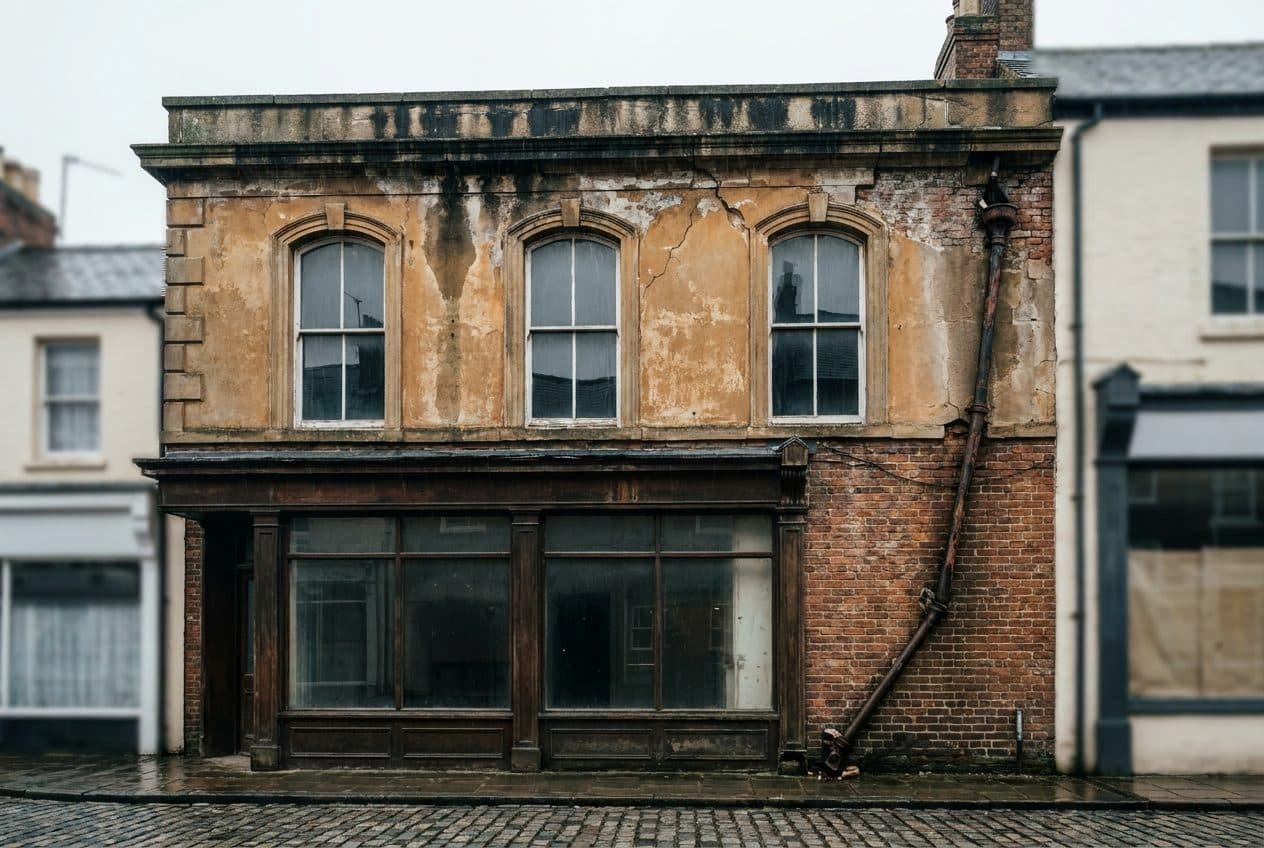
A dilapidations report stands up when every item ties a specific breach of the lease to a described remedy, a costed repair, and photographic evidence that can be checked against the property.
What the report has to prove
A dilapidations report exists to show that the condition of a property has fallen short of what the lease requires, and to set out what it would cost to put right. It is read by the other side’s surveyor, and often by solicitors on both sides. If an item cannot be checked against the lease, the photograph, and a cost, it will not survive the first round of negotiation.
That means the report is not really a narrative document. It is a schedule. Each item needs to work on its own, because in practice items get accepted, disputed, or dropped one at a time, not as a whole.
The structure that holds up
Most reports that get picked apart are missing one of these fields, not all of them. A schedule that survives scrutiny carries the same structure for every single item:
- 1Location reference, precise enough to find on a re-inspection (room, elevation, or grid reference for larger units)
- 2The relevant lease clause or covenant, stated plainly rather than assumed
- 3A description of the breach, written as a fact about the fabric, not an opinion about the tenant
- 4The remedial works needed to correct it, described in enough detail that a contractor could price it
- 5A cost for that remedy, ideally broken down rather than lumped into a single total
- 6A photograph reference tied to that exact item, not a general set of site photos
- 7A note on urgency or priority, where that affects timing
Consistency matters more than length. A report where every item follows this order is easier to check, easier to challenge on specific points, and easier to settle, because both sides can work item by item rather than arguing about the document as a whole.
Evidence that actually convinces the other surveyor
Photographic evidence only works if it is tied to a location and an item number. A folder of general site photos taken on the day is not evidence, it is a record that something was visited. What holds up is a photograph that is clearly linked to the item it supports, taken close enough to show the defect and wide enough to show where it sits.
On site, this is where most of the time gets lost, matching photos back to items after the visit, renumbering, and rewriting descriptions from memory. Capturing the location, the defect, and a short spoken note at the point of photographing each item, then grouping automatically by room and by trade, removes that step. SayScope was built around exactly that workflow: circle the defect on the photo, hold a button and describe it, and leave with a report already structured by room and trade, which maps directly onto the schedule format above.
This does not replace professional judgement on breach, remedy, or cost. It replaces the manual work of keeping evidence organised while you are still on site.
Where reports fall down
- Vague descriptions such as ‘general disrepair noted’ with nothing to check them against
- No lease clause referenced, so the other side can argue the item is out of scope entirely
- Tenant’s alterations or improvements bundled in with genuine disrepair items
- A single lump cost for the whole report instead of a cost per item
- Photographs with no clear link to the item they are meant to support
- Items written from memory after the visit rather than recorded on site
Any one of these gives the other surveyor a reason to reject the item rather than negotiate it, which slows the whole process down.
Dilapidations report or snagging report
The two get confused because both involve walking a property with a camera. A dilapidations report deals with disrepair against a lease covenant, usually at or near the end of a tenancy, and is aimed at a cost negotiation between landlord and tenant. A new build snagging report deals with construction defects against the standard the property should have been built to, and is aimed at getting a developer to correct them. The structure overlaps, item, location, description, remedy, evidence, but the reference point is different, lease clause against build standard.
For the wider picture on dilapidations, including timing and how interim and terminal schedules differ, see our full guide at /dilapidations.