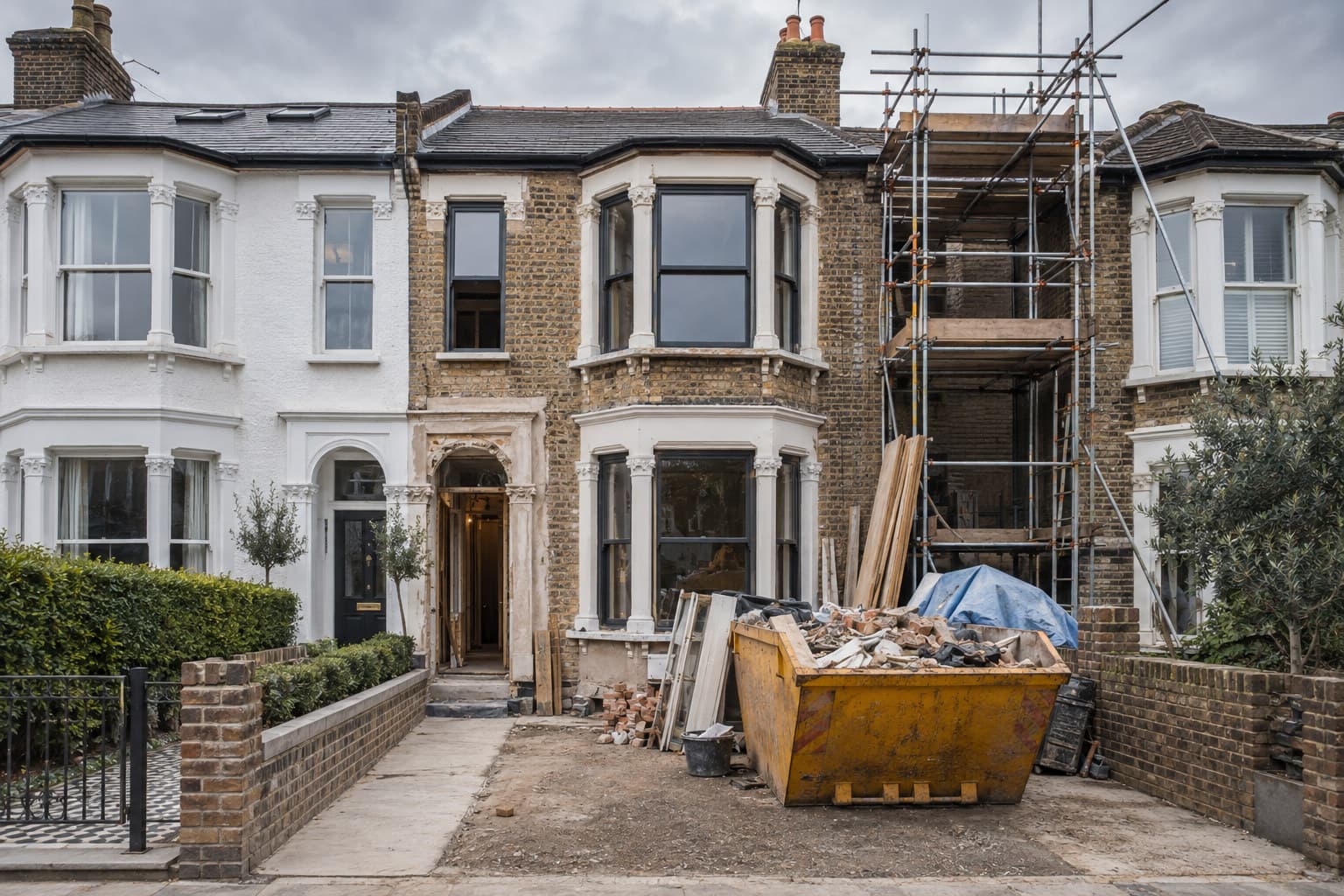
The way to not become a cowboy builder story is to photograph the work at every stage, before you hand over money at each point.
Why the photos matter more than the argument
Most disputes with a builder are not decided by who shouts loudest. They turn on who can show, clearly and with dates, what the work looked like at each stage. A phone full of dated photos, taken before you paid each instalment, is the single most useful thing you can have if the job goes wrong.
This is general information, not legal advice. Where this post mentions court procedure, that is the procedure for England and Wales.
Before you pay anything: photograph the starting point
Before work starts, photograph every room and surface that will be touched. This is your baseline. Without it, you cannot later show that a crack, a stain or a misaligned door was caused by the work rather than already there.
- Wide shots of each room from more than one angle
- Close-ups of anything already damaged, chipped or uneven
- Meter readings if the job touches gas, electrics or water
- The state of boundaries, paths and neighbouring walls if outside work is involved
During the work: photograph before each payment
Staged payments exist so that money moves roughly in step with work done. The point at which a cowboy builder story usually starts is a payment made against work that was not actually finished, or was finished badly and covered over before anyone looked properly.
- 1Photograph the work close up, from an angle that shows scale, before it is covered, boarded over or plastered
- 2Photograph the same area again once it is finished and before you pay for that stage
- 3Keep every photo dated, either by the phone’s metadata or by including something dated in shot
- 4If something looks wrong, say so and get it in writing before you pay, not after
If the work is not right
The Consumer Rights Act 2015 gives you two specific rights where a service has not been performed with reasonable care and skill, and they run in a particular order.
- Section 55: you can require the trader to redo the work to complete it properly. They must do this within a reasonable time and without significant inconvenience to you, and they bear the cost of any labour or materials needed. This right does not apply if completing the work properly is impossible.
- Section 56: where you cannot require repeat performance, or the trader has not done it within a reasonable time and without significant inconvenience, you can require a price reduction instead. Any refund due must be paid without undue delay and in any event within 14 days of the trader agreeing you are entitled to it, paid back by the same method you used, with no fee charged for making it.
Photographs from before the disputed payment are what let you show what state the work was actually in when you were asked to pay, and what state it was in afterwards.
On the day you pay, and afterwards
Walk the job one more time before final payment and photograph everything, room by room. This is also the point where a written, photographed record by trade and by room is genuinely useful, since most defects sit with a specific trade and a specific fix.
SayScope exists for exactly this walk: you photograph each defect, circle it on the photo, hold a button and say what is wrong, and leave with a report grouped by room and by trade. Visits are free and unlimited, and each account gets one report a week free, with up to 10 jobs on that report.
Keep your records. Limitation Act 1980, section 5, means a claim founded on simple contract cannot be brought more than six years after the cause of action accrued, so dated photos and reports from years ago can still matter.
If it ends up in front of a court
Nobody can tell you in advance what a court will decide, and this post will not try. What can be said is how the small claims track in England and Wales generally works, under Civil Procedure Rules Part 27.
- It generally applies to claims not exceeding £10,000
- No expert may give evidence, written or oral, at a hearing without the court’s permission
- Each party must normally file and serve copies of the documents they intend to rely on at least 14 days before the final hearing
- The strict rules of evidence do not apply, and the court need not take evidence on oath
Adjudication under the Housing Grants, Construction and Regeneration Act 1996, section 108, is fast, but section 106 closes it to a homeowner having work done on the home they live in. If you are that homeowner, this route is not open to you, whatever anyone tells you about it.