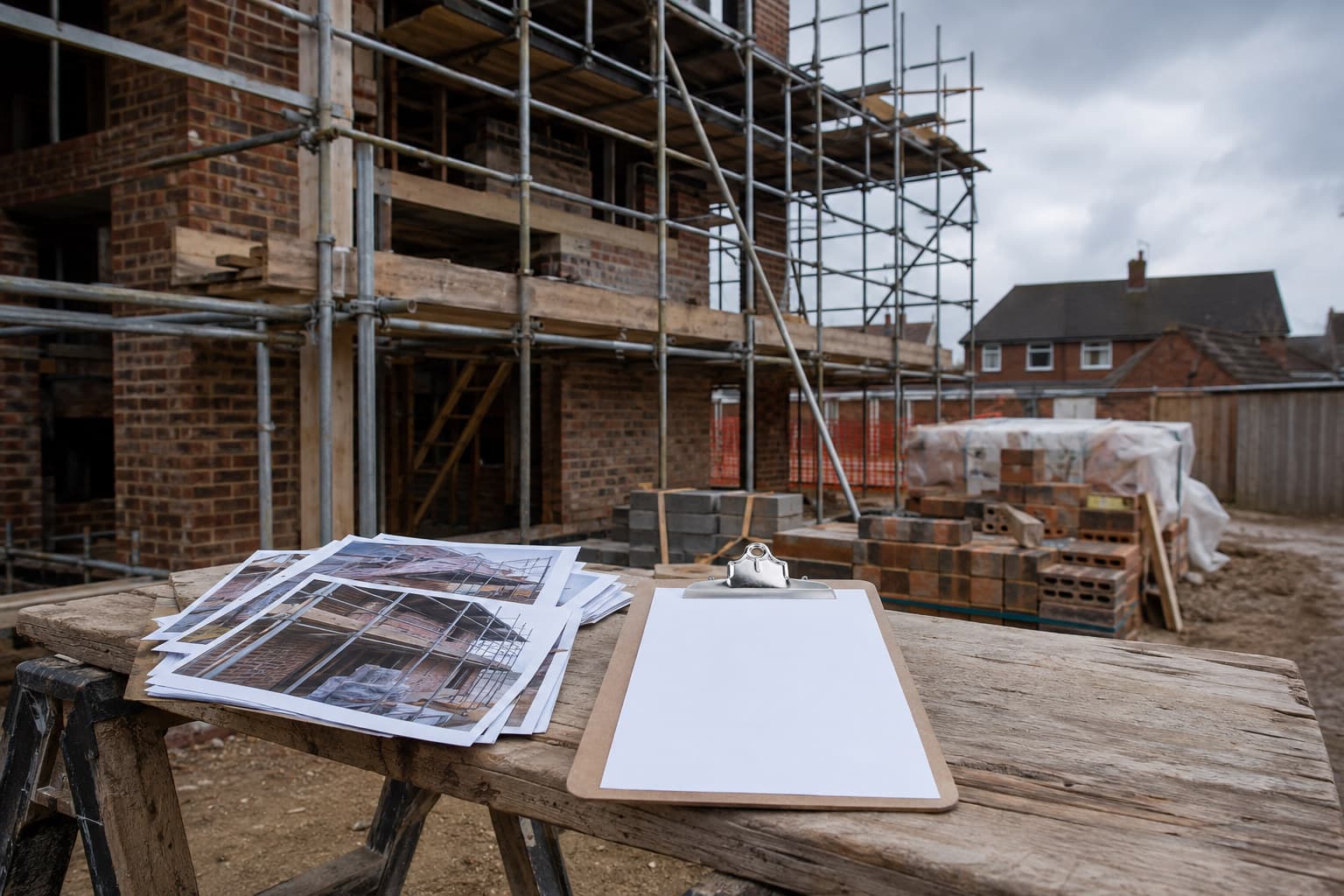
A construction dispute is not decided by who shouts loudest on site, it is decided by the record each side can put in front of an adjudicator or a court.
This is general information, not legal advice
Nothing here tells you what an adjudicator, a court or a builder will decide or do in your case. The court material below is England and Wales. If you need advice on your specific dispute, take it from someone qualified to give it.
What a dispute actually turns on
Most construction disputes are not really about who is right. They are about who can show it. Under the Consumer Rights Act 2015, section 49, every contract to supply a service includes a term that the trader must perform the service with reasonable care and skill. Whether that duty was met is a question of fact, and facts need a record.
That record is usually photographs, dates, and a description of what was wrong and where. Whoever has the clearer version of that, tied to specific items rather than a general complaint, has the stronger starting position. Nobody can tell you in advance who that will be.
What the law gives a contractor and a customer
A small number of provisions set out what can actually be required, and they are worth knowing precisely rather than roughly.
- Section 55: the consumer can require the service to be performed again to complete it properly. The trader must do this within a reasonable time and without significant inconvenience, and must bear any necessary cost including labour or materials. This cannot be required if completing performance in conformity with the contract is impossible.
- Section 56: where repeat performance cannot be required, or has not happened within a reasonable time and without significant inconvenience, the consumer can require the price to be reduced by an appropriate amount. A refund that is due must be paid without undue delay and within 14 days of the trader agreeing it is owed, by the same means the consumer paid, with no fee charged for making it.
- Limitation Act 1980, section 5: an action founded on simple contract cannot be brought after six years from the date the cause of action accrued.
None of these provisions say what a particular defect is worth, or who caused it. They set out what can be required once fault and cost are established, and by when a claim must be brought.
Adjudication: who it is actually open to
The Housing Grants, Construction and Regeneration Act 1996, section 108, gives a party to a construction contract the right to refer a dispute to adjudication at any time. The timetable secures the adjudicator’s appointment and referral within 7 days of notice, and the adjudicator must decide within 28 days of referral, extendable by up to 14 days with the referring party’s consent, or longer if both parties agree after referral. The decision is binding until the dispute is finally resolved by legal proceedings, arbitration or agreement.
If it ends up in the small claims track
Civil Procedure Rules Part 27 covers claims that generally do not exceed £10,000. Two rules matter most to a contractor building a case. First, no expert may give evidence, written or oral, at a hearing without the court’s permission, so an expert report is not something either side can simply produce and expect to be heard. Second, the standard directions require each party to file and serve copies of all documents they intend to rely on, at least 14 days before the final hearing. The strict rules of evidence do not apply and the court need not take evidence on oath, which puts more weight on the documents themselves, not less.
That 14-day filing point is where a disorganised record costs the most. If your evidence is a folder of undated phone photos, assembling it into a document bundle at short notice is where disputes are lost on presentation rather than on the underlying facts.
Building the record before there is a dispute
The cheapest point to build a strong record is during the job, not after a dispute starts. A dated, room by room, trade by trade set of photographs with a note against each item is the kind of document that files cleanly for a 14-day deadline and speaks for itself in front of someone who was not on site.
SayScope is built for exactly that record: walk the property, photograph and circle each defect, speak what is wrong, and leave with a report grouped by room and by trade. Visits are free and unlimited, and each account gets one report a week free, with a bigger visit or a second report the same week needing a plan. It will not tell you who is right. It gives you the record to argue from.