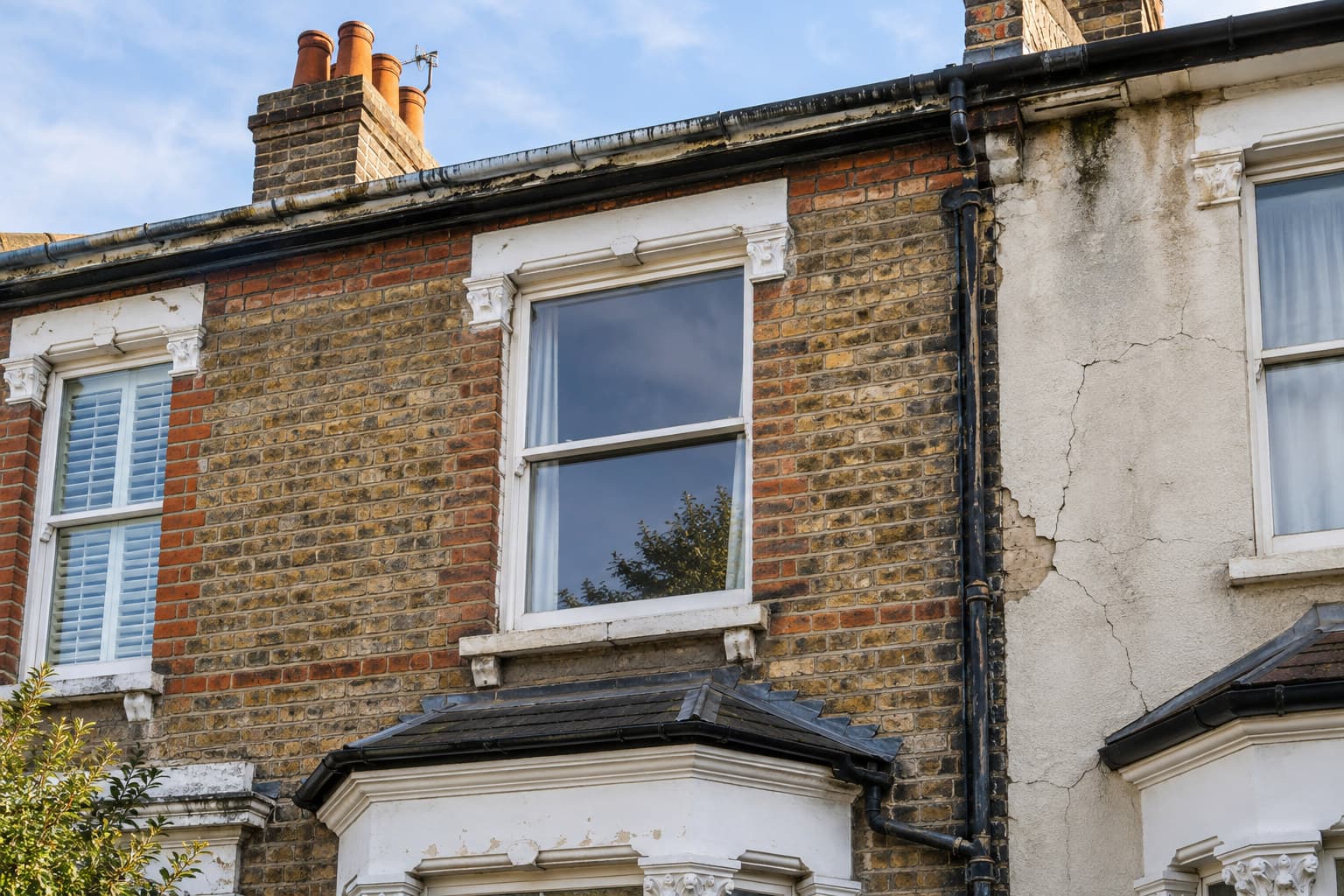
A condition survey is a structured record of a building’s visible defects and general state of repair at a fixed point in time.
What a condition survey actually is
A condition survey is a visual, non-invasive record of a building’s fabric and services at the time of inspection. It is not a valuation and it does not certify compliance with any code. Its purpose is to describe what the surveyor can see, room by room and element by element, so that the client has a dated reference point for the property’s condition.
Surveyors use condition surveys for many different jobs: pre-acquisition due diligence, landlord and tenant schedules, insurance reinstatement records, and general asset management. The scope and depth vary by instruction, but the core discipline is the same, record what is there, not what should be there.
What gets recorded
A thorough condition survey typically covers the following, structured by room or by element depending on the client’s preference.
- External envelope: roof coverings, rainwater goods, brickwork, render, pointing, damp staining
- Structural indicators: cracking, movement, bowing, settlement signs
- Windows and doors: seals, frames, glazing condition, ironmongery
- Internal finishes: walls, ceilings, floors, decoration, visible damp or mould
- Services: visible pipework, radiators, electrical fittings, extract fans, where accessible
- External areas: boundaries, hardstanding, drainage gullies, outbuildings
Each item is usually photographed, located, and given a short description of the defect or condition observed. Severity ratings and repair urgency are sometimes added, depending on the survey format agreed with the client.
How the record should be organised
A condition survey is only useful if the reader can find what they need quickly. Grouping by room keeps the report navigable for anyone walking the property later. Grouping by trade or by building element helps when the findings feed into repair costings or a scope of works.
Photographs should be tied clearly to each item, ideally with the defect marked or circled on the image itself. A written description without a located photo is far less useful to anyone who was not on site.
Condition surveys and new build inspections
On a new build, a condition survey overlaps with what is sometimes called a snagging survey, though the emphasis is different. A snagging survey focuses on defects against the standard the home should have been built to. A general condition survey is broader and simply records the state of the property as found.
Under the New Homes Quality Code Version 2, March 2026, a buyer of a new build has the right to a pre-completion inspection. They may appoint a professional from a recognised body such as CABE, CIOB, ICWCI, RICS or RPSA with professional indemnity insurance, or carry out the inspection themselves using the NHQB checklist. Where issues breach warranty technical standards, the code sets out that the developer addresses them ideally before legal completion or within 30 days.
A professional snagging survey typically costs between £300 and £600 depending on property size.
Condition surveys and the NHBC warranty period
Where a property is covered by NHBC Buildmark, the warranty runs for two years from legal completion, during which NHBC operates a free resolution service for the builder to address issues. After that, eight years of insurance cover applies against specified structural defects. A condition survey carried out near the end of the two year period gives a dated record of the property’s state before that resolution service ends, which can be useful evidence if a dispute arises later.