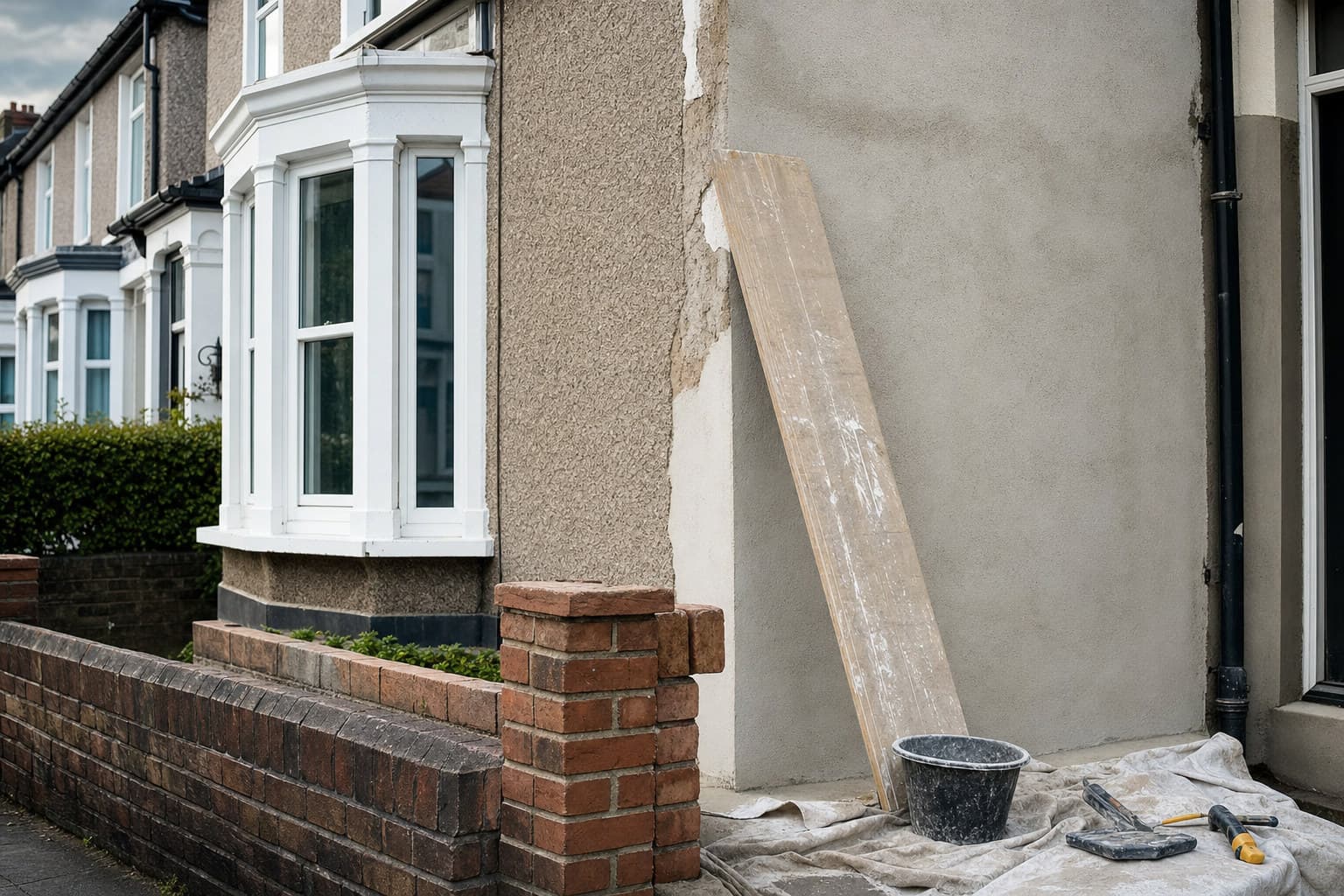
If a trader’s work falls short of reasonable care and skill, the law generally lets you ask for it to be put right first, and only lets you ask for money off if that is not possible or has not happened within a reasonable time.
The starting point: reasonable care and skill
Under the Consumer Rights Act 2015, section 49, every contract to supply a service is treated as including a term that the trader must perform the service with reasonable care and skill. If a builder, decorator, roofer or any other tradesperson has not met that standard, you have a right to do something about it. What follows is general information, not legal advice, and the court material below applies to England and Wales.
The Act does not hand you a free choice of remedy. It sets out an order. Understanding that order matters, because asking for the wrong thing first can slow you down.
Step one: repeat performance
Section 55 of the Consumer Rights Act 2015 gives you the right to require the trader to perform the service again so that it is completed properly. The trader must do this within a reasonable time, without significant inconvenience to you, and must bear any necessary costs, including the cost of labour or materials.
This right does not apply if completing the work in conformity with the contract is impossible. That might be the case where the defect cannot practically be corrected, for example because the fix would require undoing finished work elsewhere in a way that is not realistic.
Step two: price reduction
Section 56 gives you the right to require the trader to reduce the price by an appropriate amount. This becomes available where you cannot require repeat performance, for example because it is impossible, or where the trader has not carried out the repeat performance within a reasonable time and without significant inconvenience.
In other words, a price reduction is not the first thing you reach for. It sits behind repeat performance in the order the Act sets out, and becomes relevant once repeat performance is unavailable or has not delivered.
Where a refund is due under section 56, it must be paid without undue delay and in any event within 14 days beginning with the day the trader agrees you are entitled to it. It must be paid by the same means you used to pay, and the trader cannot charge a fee for making it.
How long you have to act
The Limitation Act 1980, section 5, sets a six year limit from the date the cause of action accrued for bringing an action founded on simple contract. That is the outer limit for a contract claim; it is not a reason to delay raising the problem with the trader in the meantime.
Adjudication: who it is open to
You may come across adjudication as a faster route for construction disputes, under section 108 of the Housing Grants, Construction and Regeneration Act 1996. A party to a construction contract can refer a dispute to adjudication at any time, with a tight timetable: the adjudicator’s appointment and the referral of the dispute are secured within 7 days of notice, and the adjudicator must decide within 28 days of referral, extendable by up to 14 days with the consent of the referring party. The decision binds the parties until the dispute is finally resolved by legal proceedings, arbitration or agreement.
Section 106 of the same Act closes that route for most homeowners. It does not apply to a construction contract with a residential occupier, meaning one that principally relates to work on a dwelling that a party occupies, or intends to occupy, as their residence. If the work is on the home you live in, you do not have a statutory right to adjudicate under this Act.
If it ends up in court
Claims that do not resolve directly between you and the trader may end up in the small claims track, which under Civil Procedure Rules Part 27 generally applies to claims not exceeding £10,000. A few features of that track are worth knowing in advance.
- No expert may give evidence, written or oral, at a hearing without the court’s permission (rule 27.5).
- The standard directions require each party, at least 14 days before the final hearing, to file and serve copies of all documents they intend to rely on.
- The strict rules of evidence do not apply, and the court need not take evidence on oath.
No one can tell you in advance what a court or a builder will decide or do. What you can control is the quality and order of the documents you put together.